Over 50? Your Waist Says More About Your Heart Than Your Scale Does
 7
Mins Read
7
Mins Read
Step on a scale and you get one number. It tells you how much you weigh. It tells you nothing about where that weight sits. When it comes to heart disease, your waist size may matter more.
A large study published in August in the Journal of the American College of Cardiology pooled 15 long-running studies covering more than 259,000 adults with no known heart disease, then followed them for about 20 years. The team tracked nine outcomes, including heart attack, stroke, and heart failure. People whose weight looked normal or only slightly high but carried extra fat around the middle had a 15% to 50% higher risk of most of them.
The journal’s editor-in-chief, Dr. Harlan Krumholz, put it bluntly: “It is time to abandon a sole focus on body mass index.”
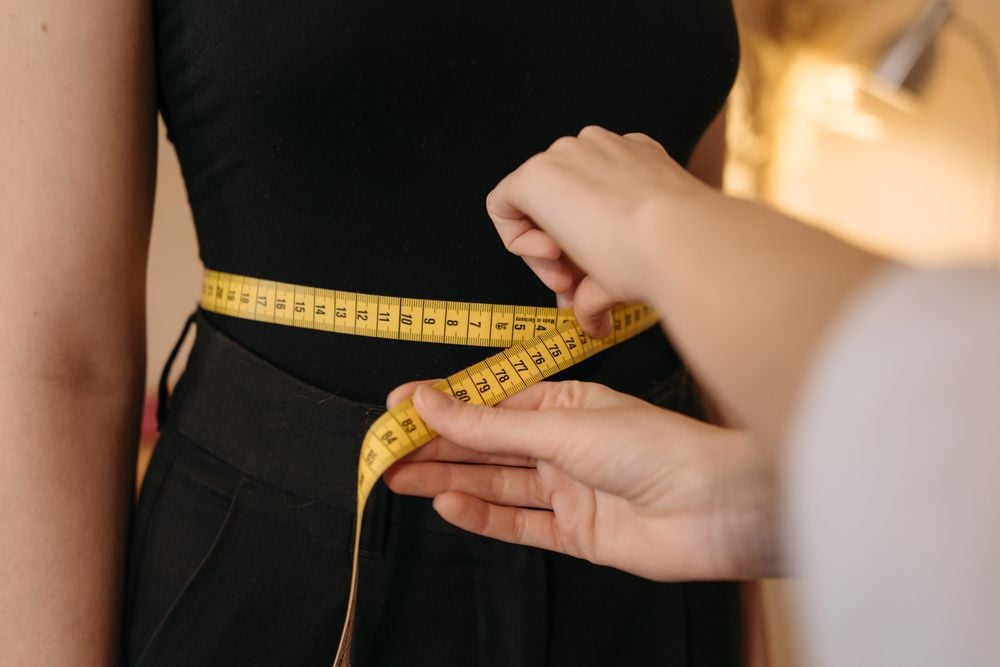
You can check your waist size, and what it may say about heart disease risk, at home with a tape measure in a couple of minutes. This guide starts with how to measure properly, because small mistakes shift the number more than you’d expect. Then it covers what the number means once you’re past 50, and what actually moves it.
Already know how to measure? Skip ahead to number 2.
You’ll also like:
- 5 Everyday Habits That May Increase Your Stroke Risk
- Doctors Say These 5 Everyday Habits Can Improve Heart Health Naturally
- 10 Seemingly Harmless Foods That Ruin Your Blood Pressure
1. Measure Your Waist Size the Right Way
Most of us have wrapped a tape around our middle at some point. Few of us have done it the way researchers do.
That gap matters more than it sounds.
Find your landmarks
Forget where your waistband sits. The World Health Organization and the International Diabetes Federation both recommend measuring at the midpoint between your lowest rib and the top of your hip bone. The US National Institutes of Health uses a slightly lower spot: the top of the hip bone itself.
To find the midpoint, stand up and press gently along your side until you feel the bottom edge of your ribcage. Then find the bony ridge at the top of your hip. The tape goes halfway between the two.
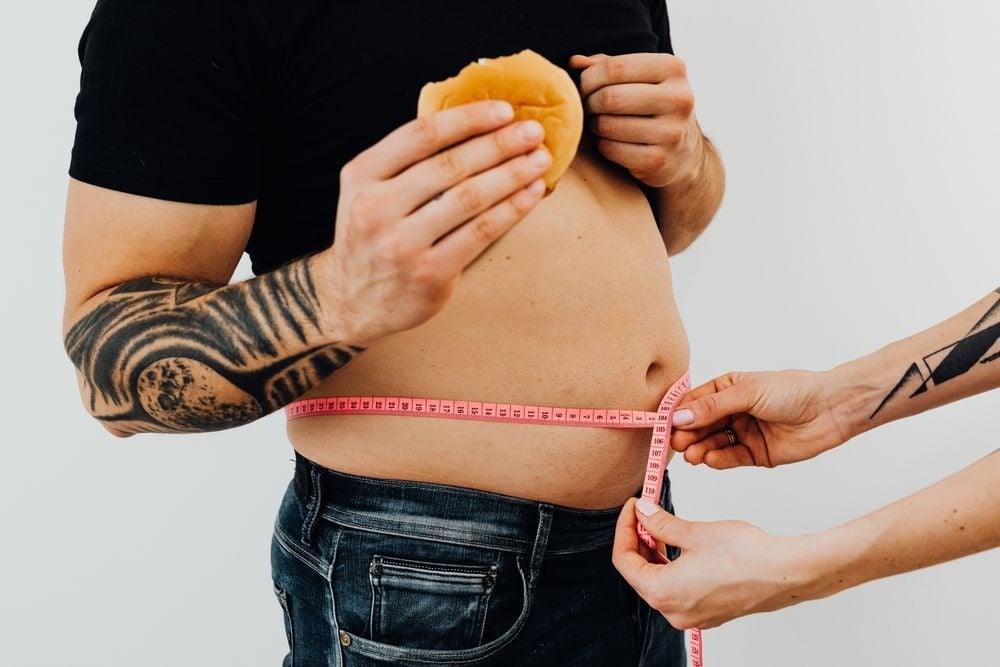
Why be this fussy? Researchers in Brazil measured 119 adults who were overweight, with an average age of about 50, at six different spots around the middle. The largest average gap between spots came to roughly 7 cm in men and 10 cm in women. That’s close to 4 inches, from tape placement alone.
Bony landmarks have a second advantage. The same researchers noted that your ribs and hip bones stay put as your body fat changes, which makes them the better choice if you plan to track your waist over months.
Take the reading like a researcher.
In that study, each person was measured standing straight with arms hanging at the sides, at the end of a normal breath out, with the tape against the skin but not pressing into it.
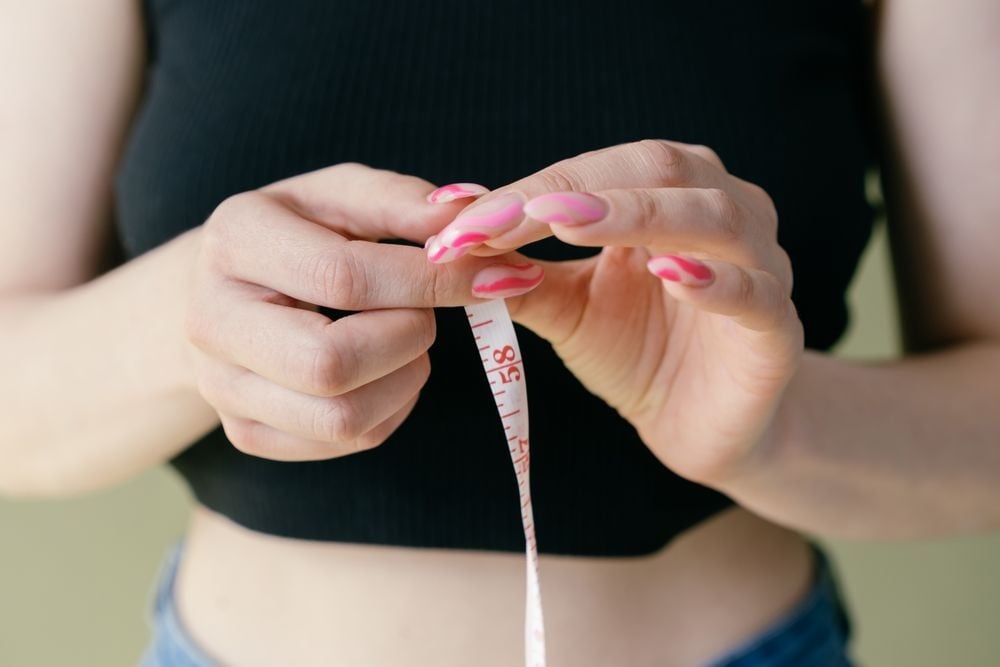
Copy that at home:
- Measure on bare skin, never over clothing.
- Keep the tape level all the way around. A mirror helps.
- Breathe out normally, then read the tape. No sucking in.
- Take two readings. If they disagree, take a third.
Stick to the same time of day whenever you measure, so each reading compares like with like.
Check it against your height.
A waist number on its own is hard to read. The same measurement means something different on a tall frame than on a short one.
That’s why the UK’s National Institute for Health and Care Excellence (NICE) advises adults to keep their waist measurement to less than half their height. The advice covers adults with a BMI below 35. One reason the committee liked it: people can easily measure it themselves, interpret the result,t and seek medical advice if they’re at increased risk.
The math takes seconds. Divide your waist by your height, in the same units. Under 0.5 is the target.
At 5 feet 8 inches, or 68 inches tall, that means a waist under 34 inches.
A caveat if you’re over 60
The half-your-height rule has a weak spot, and it falls on older readers.
Most of us lose some height as we age. Tom Sanders, professor emeritus of nutrition at King’s College London, pointed out that people over 60 tend to lose between 2.5 and 7.5 cm in height, and more with osteoporosis. His concern was that the rule would label far more older adults as at risk of diabetes than the International Diabetes Federation’s own cutoffs do.
So if you’re past 60 and your result lands close to the line, treat it as a flag worth raising with your doctor.
2. Your BMI Can Mislead You in Both Directions
BMI is your weight divided by your height squared. It’s quick, and it’s everywhere. But it can’t see where fat is stored.
The JACC study shows how often that matters. Among people with a normal BMI, 5% had a high waist circumference and 18% had a high waist-to-hip ratio. Among those classed as overweight, the figures were 39% and 40%.
A scale would never flag those people.
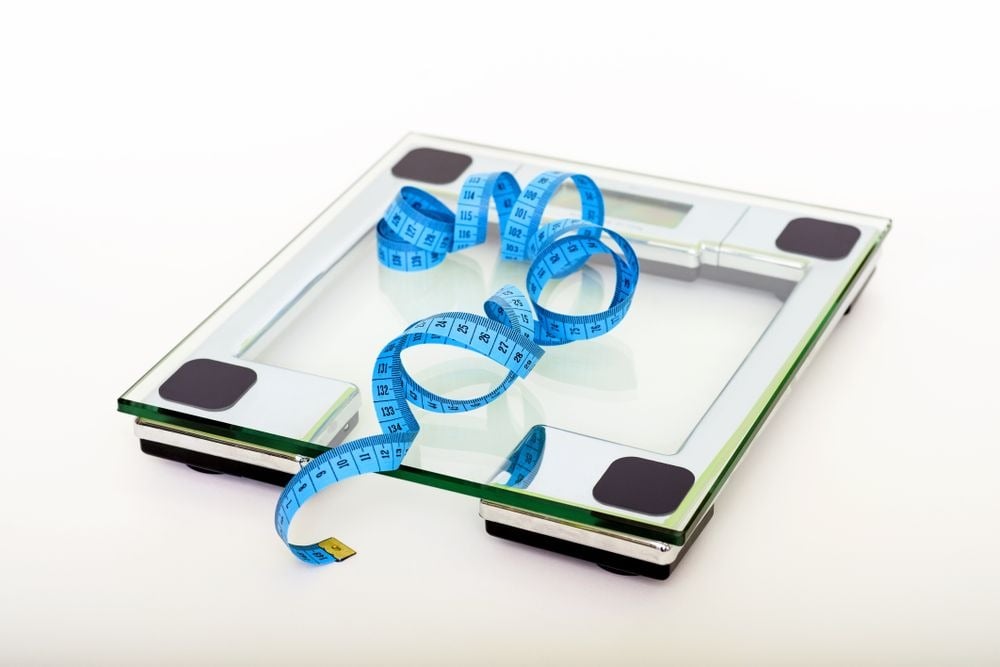
The surprise runs the other way too. People classed as obese but with a small waist had heart risks no higher than people of normal weight with a small waist.
Read that second finding carefully. It describes averages across a very large group, and it says nothing to suggest excess weight is harmless. The useful takeaway is narrower: fat around the middle appears to carry risk that BMI alone misses.
Two limits are worth knowing. This was an observational study, so it shows a link rather than proving cause. And it took each person’s waist measurement only once, with no data on diet or physical activity.
3. Why Your Middle Changes After 50
Plenty of people notice their waist growing in their 50s even when their weight barely moves. There are real reasons for that.
For women, the menopause transition is a big one. During the reproductive years, estrogen encourages the body to store fat on the hips, thighs and buttocks. As estrogen falls, storage shifts toward the abdomen and toward visceral fat, the deeper fat packed around the internal organs.
University Hospitals menopause specialist Dr. Rachel Pope notes that for women in the transition, the same active lifestyle can still result in fat redistribution to the belly, driven by the metabolic changes that hormone shifts set off.

Men aren’t exempt. Aging itself drives a gradual loss of muscle mass, and less muscle means a lower resting metabolism.
Why does this belong in a heart article? Because visceral fat is associated with a higher risk of insulin resistance, cardiovascular disease, and type 2 diabetes.
If your scale has told you the same story for years, your tape measure might tell you a different one.
4. Add Soluble Fiber to Your Plate
Soluble fiber is the kind that dissolves into a gel as it’s digested. Beans, peas, and many fruits are good sources.
A five-year study from Wake Forest Baptist Medical Center followed 1,114 African American and Hispanic American adults and measured their abdominal fat with CT scans at the start and again at the end. More soluble fiber was linked to a slower build-up of visceral fat, with no such link for the fat just under the skin.

The amount involved was modest. The researchers looked at each extra 10 grams of soluble fiber a day, which they said you could get from two small apples, one cup of green peas,s and half a cup of pinto beans.
Keep the claim in proportion. This was an observational study in one population, and fiber on its own won’t flatten anyone’s middle. Still, it’s a food change with evidence tied to visceral fat specifically, and beans and peas are cheap.
If you eat very little fiber now, add it gradually over a few weeks.
5. Move Most Days, and Keep Some Strength Work
You can’t spot-reduce the fat around your organs. Crunches won’t reach it. You can reduce it overall.
Harvard Health advises at least 150 minutes of moderate-intensity activity a week, alongside a heart-healthy diet, to work on abdominal fat. In the Wake Forest study, the more active participants also built up visceral fat at a slower rate over the five years.
What did “active” mean there? The lead researcher defined moderate activity as exercising vigorously for 30 minutes, two to four times a week.
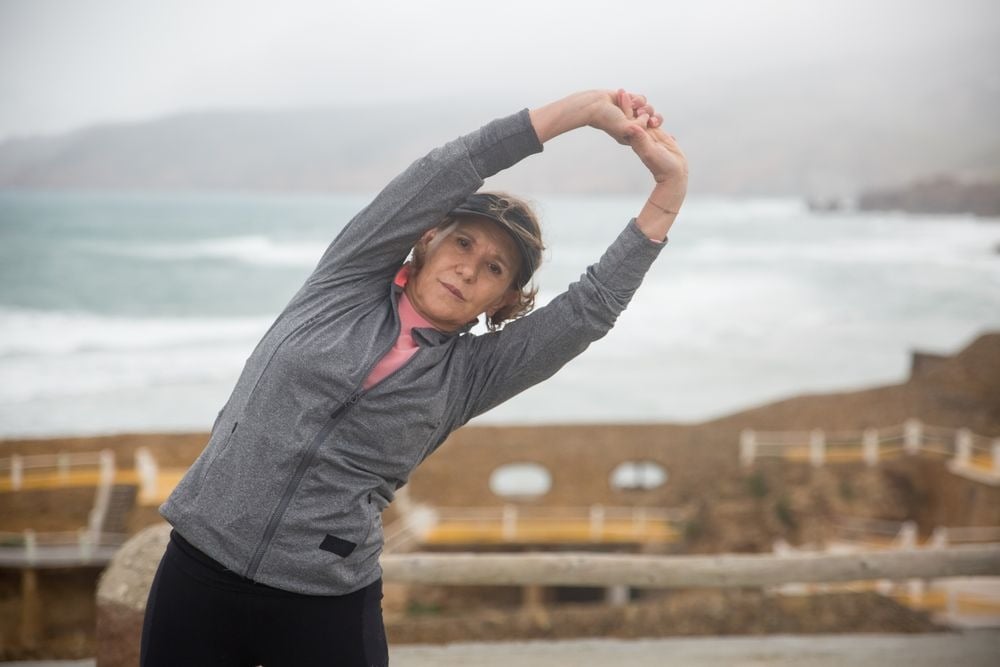
After 50, add some strength work to the mix. Dr. Pope recommends strength training to combat muscle loss, which is part of why the middle changes in the first place.
If you have a heart condition, joint problems, or any symptoms during exercise, check with your doctor before stepping things up.
6. Take the Number to Your Next Checkup
This last step is the one that turns a tape measure into something useful.
Write down your waist measurement, your height, and the date. Bring them to your next appointment and ask how that waist fits alongside your blood pressure, cholesterol, and blood sugar results.
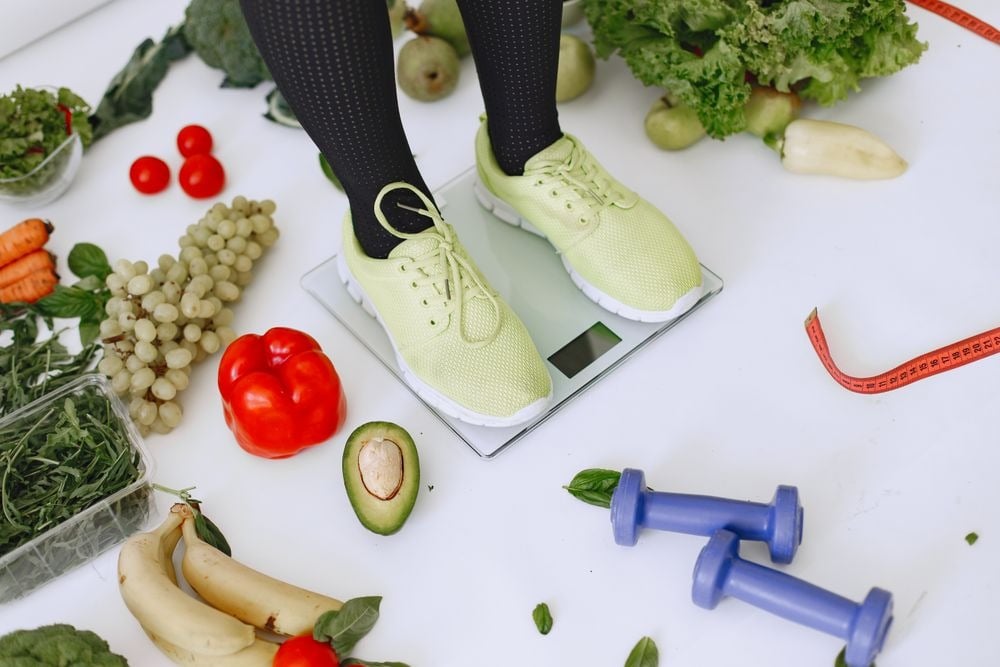
Don’t assume your doctor already has the number on file. The study’s lead author, Dr. Zeina Dardari, encouraged clinicians to consider where fat is carried across the entire BMI range when they assess heart risk. Bringing your own measurement makes that conversation easy to start.
Then measure again in a month, at the same spot and the same time of day. One reading is a snapshot. A few readings over time show you which way you’re heading.
Final Thoughts
Your scale answers one question: how much you weigh. Your waist answers a different one, and for your heart, it may be the more telling of the two. The JACC findings suggest that people with a normal or slightly high BMI can still carry meaningful risk around the middle. After 50, hormonal and muscle changes make a thickening middle more likely, even when your weight holds steady.
The fix starts small. Find your landmarks, measure properly, compare the result with half your height, and take the number to your doctor. From there, soluble fiber, regular activity, and some strength work give you real levers to pull. None of this replaces a proper medical assessment, but it gives you a far better question to bring to one.