
The 60-Second Walking Test Everyone Over 50 Should Try
 8
Mins Read
8
Mins Read
For decades, walking advice has come down to one number: 10,000 steps a day.
A study published this month in the British Journal of Sports Medicine suggests the number you should care about may be a different one. How many steps you take per minute.
Researchers from Monash University and the University of Sydney analyzed activity-tracker data from 64,743 UK adults, average age 61, and followed them for about eight years. People who walked at a brisker pace had a lower risk of early death, even when their daily step count fell well short of the usual targets.
You can find your own pace in one minute. All you need is a flat stretch of pavement and the ability to count.
You’ll also like:
- The Health Benefits of Walking at Any Age
- 7 Treadmill Workouts That Improve Heart Health After 40
- The 6 Things Experts Recommend for Healthy Aging After 40
How to Take the 60-Second Walking Test
Measuring walking pace in steps per minute has a technical name: cadence. Researchers have used it for years because it tracks closely with how hard your body is working, and it requires no equipment. A 2018 review of 38 studies noted that cadence can be measured by simply counting your steps for one minute.
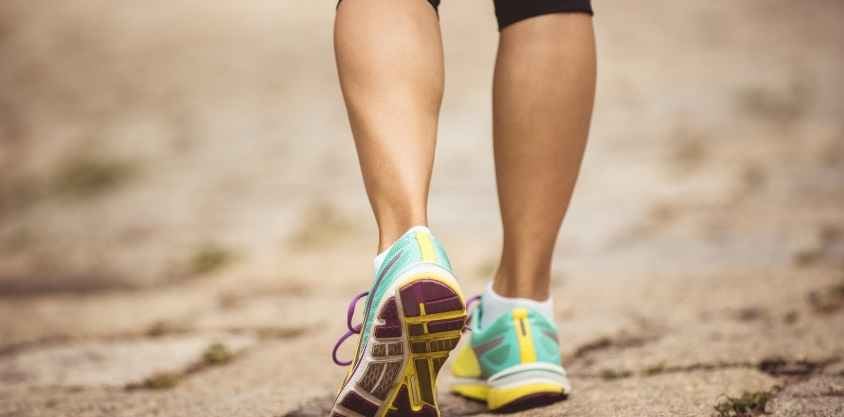
Here’s how to do it.
Pick a flat route
Choose a path with no hills, stairs, or crossings that force you to stop. Hills and stairs change the length and rhythm of your stride, so a flat route keeps your result comparable every time you retest.
Warm up first
Walk at an easy pace for two to three minutes. Your first minute out the door is rarely your real pace.
Walk with purpose, then count.
Pick up to the pace you’d use if you were running a little late for something. Start a timer and count every step, left and right, for 60 seconds. If you lose track easily, count only your right foot and double the number.
The 15-second shortcut
Can’t hold a count for a full minute? Count for 15 seconds and multiply by four. Emmanuel Stamatakis, a professor at Monash University and the study’s corresponding author, suggested exactly this method when he spoke to CNN about the research.
Check your watch
Many fitness trackers and phone apps record cadence, usually labelled steps per minute. On most devices, it sits in the summary you get after a walk rather than on the live screen during it. If yours records it, you can check your number on any walk without counting a thing.
What Your Number Means

The most widely used benchmarks come from the CADENCE-Adults study, a series of lab studies led by Catrine Tudor-Locke that measured the energy cost of walking at different step rates. Intensity is expressed in METs, a measure of how much energy an activity burns compared with sitting still.
Under 100 steps per minute
If your number lands here, it’s no cause for alarm. It means your purposeful walk is below the line researchers use for moderate intensity.
You’re still moving. You just have room to push.
100 to 109 steps per minute
This is the threshold. Across studies of adults aged 21 to 60, about 100 steps per minute consistently matched moderate-intensity exercise, the level public health guidelines are built around. A later CADENCE study confirmed the same threshold held for adults aged 61 to 85.
110 to 129 steps per minute
Above 100, each additional 10 steps per minute adds roughly one MET of intensity. So 110 is a little harder, 120 harder again. This band is where brisk walking starts to feel like a workout.
130 steps per minute and above
In adults up to age 60, about 130 steps per minute marked the start of vigorous intensity. Walking at this cadence is hard to sustain for most people. For adults over 60, the research is less settled, so treat this band as a rough guide.
Over 60? Your Line May Be 105

This is the detail most coverage of the new study left out.
The 100-steps benchmark measures intensity in absolute terms: the same energy cost for everyone. But the same pace feels harder for a less fit body. When CADENCE researchers looked at adults aged 61 to 85 and measured intensity relative to each person’s own fitness, the best threshold for moderate intensity came out at 105 steps per minute or more.
If you’re over 60, 105 is a better target than 100.
Why Pace Matters as Much as Step Count
The new study grouped participants by daily steps (under 5,000, 5,000 to 7,500, 7,500 to 10,000, and over 10,000) and by what researchers call “peak-30 cadence”. That’s the average pace of each person’s 30 fastest minutes of walking in a day, which didn’t need to be consecutive.

The lowest risk of death overall was among people taking about 7,500 to 10,000 steps a day.
The more interesting finding was at the bottom of the range. Among people taking fewer than 5,000 steps a day, those who walked faster during their most active half-hour had roughly a one-quarter to one-third lower risk of dying during follow-up than slow walkers in the same group, according to co-author Nicholas Koemel. Their risk was similar to people taking 5,000 to 7,500 steps at a slower pace.
In other words, if you can’t walk more, walking faster may get you some of the same benefit.
Two caveats matter. The study was observational, so it shows a link between pace and lower risk, not proof that speeding up causes it. And the evidence isn’t unanimous. An earlier large US study found that once total daily steps were accounted for, pace was no longer significantly linked to mortality.
Step count and pace both appear to matter. This study adds weight to the pace side.
Your 60-second test isn’t the same measurement the researchers used. They took a week of wrist-tracker data. Your count tells you whether your purposeful walk reaches brisk intensity, which is the kind of walking the study linked to lower risk.
The 10,000-Step Target Came From a Pedometer Campaign
If 10,000 steps has always felt out of reach, this should help.
According to Stamatakis, the target didn’t come from a scientific finding. It traces back to a 1960s marketing campaign for a Japanese pedometer.
That doesn’t make more steps useless. The new study found steady benefits as daily steps rose. But it does mean 10,000 was never a line between healthy and unhealthy.
Your Doctor May Already Be Timing Your Walk
Walking speed has a long history in medicine for older adults. A 2011 study in JAMA pooled data from nine cohorts of older adults and found that gait speed was associated with survival in every one of them. Survival rose steadily as walking speed increased.
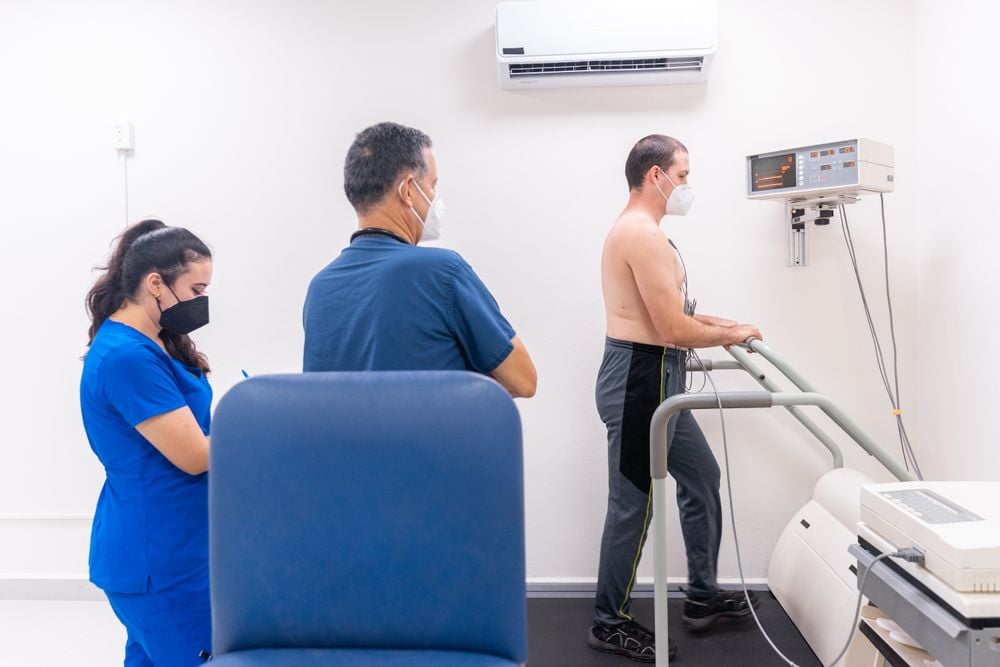
Gait speed is measured in meters per second over a set distance, so it isn’t the same as your step count per minute. But both point to the same thing. How briskly you move is a useful window into how your body is aging.
How to Raise Your Number
If your first test came in under 100, or under 105 if you’re past 60, these are practical ways to lift it.

Take Quicker, Shorter Steps
The instinct when trying to walk faster is to lengthen your stride. Try the opposite. Cadence is steps per minute, so the direct way to raise it is to take more of them. Shorter, quicker steps also keep your feet landing under your body instead of reaching out in front.
Bend your elbows and keep the arm swing quick and compact.
Walk to a 100-Beat Soundtrack
Find a playlist at 100 to 110 beats per minute, or set a free metronome app to 100, and match one step to each beat.
It takes the counting out of it. Once the rhythm feels natural, nudge the tempo up by five.
Try Interval Walking
Researchers at Shinshu University in Japan developed a method called interval walking training, sometimes called “Japanese walking” online. The protocol alternates three minutes of fast walking with three minutes of slow walking, repeated at least five times, on four or more days a week.
In their original five-month trial, published in Mayo Clinic Proceedings in 2007, middle-aged and older adults who walked in intervals improved their aerobic fitness and thigh strength more than those who walked at a steady moderate pace.
The fast intervals are a natural place to practice your target cadence. The slow ones give you a break before the next push.
Protect Your Brisk Half-Hour
The study measured each person’s 30 fastest minutes of the day. So one brisk stretch of walking a day is the target, and the rest can happen at whatever pace suits you.
A practical way to do that: pick one walk you already take, like the walk to the station or the loop around the block after dinner, and make that your fast one.
Make One Walk Longer
A separate study published in Annals of Internal Medicine in October 2025 looked at how people gathered their steps. Among less active adults, those who took most of their steps in walks of 15 minutes or longer had lower risks of death and heart disease than people whose walking came in bursts of under five minutes.
Combine the two findings. One longer walk, at a brisk pace, may be the most efficient walk of your day.
Retest Every Two Weeks
Write down your number and the date. Take the test again on the same route every couple of weeks.
The same route matters. A different pavement, a windier day, or a gentle incline you barely notice will all move the number for reasons that have nothing to do with your fitness.
Cadence is a health number you can move yourself, for free, without a clinic appointment. Watching it climb over a few months is a good reason to keep going.
When to Add Steps Instead of Speed
Walking faster isn’t right for everyone. Stamatakis said that for people with a bad knee, poor balance, or a fear of falling, being told to walk faster is unhelpful, and adding steps at a comfortable pace is the sensible alternative.
He also offered a simpler way to judge pace than counting. At a brisk pace, your breathing should get noticeably heavier, and you should feel warmer, but you should still be able to talk in short sentences.
If you have a heart condition, high blood pressure, or any other health concern, talk to your doctor before increasing the intensity of your walks. Stop and seek medical help if you feel chest pain, dizziness, or unusual shortness of breath.
Final Thoughts
The 60-second walking test gives you a number that’s easy to find and easy to act on. For most adults, about 100 steps per minute marks moderate intensity, and for adults over 60, the better target is around 105. The latest research adds to a growing body of evidence that how briskly you walk matters alongside how far, especially if your daily step count is low.
Start with one walk. Count your steps, write down the number, and try to nudge it up over the next few weeks with shorter steps or a faster beat. If speed isn’t comfortable for your body, add steps at a pace that is. Either route counts, and the one you’ll stick with is the one that works.


