How to Build Your Muscles After 70 by Working Out Just Once a Week
 4
Mins Read
4
Mins Read
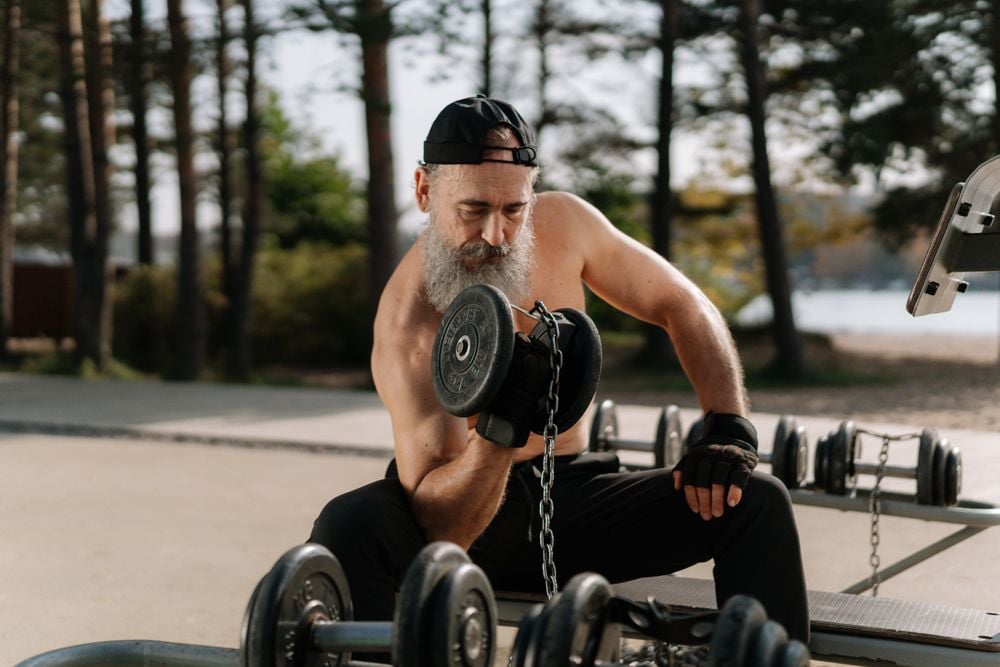
Some people think that you can only build muscle when you’re younger, but that’s not the case. With the right routine and diet, you can still build muscle well into your 70s and beyond. Even a single weekly strength-training session can make a meaningful difference, helping support your strength, mobility, and independence as you age.
When you’re 70 and over, you don’t need to spend hours working out. More isn’t always better; training smarter is the key. The goal is to focus your limited workout time on movements that provide you the most benefit while allowing your body enough time to recover.
1. Why Once a Week Can Be Enough
To be effective, you may only need to work out once a week, especially when you’re just getting started. Your body can continue building muscle well into your 80s. However, recovery generally takes longer with age, making rest an equally important part of your training.
That extended recovery window isn’t necessarily a weakness. It’s an opportunity to work out smarter and give your muscles time to adapt.

Even short amounts of weekly strength training can provide numerous health benefits. Research suggests that around 60 minutes of strength training per week may be associated with a lower risk of cardiovascular disease and premature death. More importantly, choosing a routine you can stick with is often better than starting an ambitious schedule you quickly abandon.
If once a week is what allows you to stay consistent, it can be a useful starting point. You can always adjust your routine as your fitness and recovery improve.
2. Focus on the Eccentric Phase
This strategy is rarely discussed in workouts for people in their 70s. The eccentric phase of an exercise is the lowering portion, when the muscle lengthens while working against resistance. For example, it’s the sitting-down portion of a squat and the lowering portion of a push-up.

Many people rush through this part of an exercise without really thinking about it. Slowing down the lowering phase can make an exercise more challenging without necessarily requiring heavier weights.
Eccentric training can also help improve your muscle strength and control. It gives you a chance to focus on technique and body awareness, which can become increasingly valuable as you age.
You don’t need to make every repetition extremely slow. Instead, try lowering with control rather than simply dropping into the bottom of the movement.
3. Have Protein Before Bed
What you eat before and after a workout matters, but another meal may deserve some attention: your pre-sleep snack.
Having a high-protein snack before bed can provide your body with amino acids overnight. Research suggests that consuming protein before sleep can increase overnight muscle protein synthesis, thereby supporting muscle repair.

This can be particularly useful as you get older because maintaining muscle mass can become more challenging. Your muscles still respond to protein, but older adults may benefit from paying closer attention to getting enough high-quality protein throughout the day.
A small serving of Greek yogurt, cottage cheese, milk, or another protein-rich food can be an easy option before bed, depending on your dietary needs.
4. Choose Multi-Joint Movements
When you’re training only once a week, choosing the right exercises becomes even more important. You want to get as much value as possible from your workout without making it unnecessarily complicated.
This means focusing on movements that target multiple muscle groups at once rather than spending your entire session isolating individual muscles.

Multi-joint or compound exercises can help develop functional strength that carries over into everyday activities. Squats, for example, train the muscles you use to sit down and stand up. Pressing and rowing movements can help build the upper-body strength needed for daily tasks.
Your joints also need attention as you age, so choose exercises that you can perform comfortably and with control. Note that you may need to modify movements based on your mobility, balance, and/or previous injuries.
The goal isn’t to lift the heaviest weight possible. It’s to perform useful movements safely and consistently.
5. Train Your Nervous System, Too
After 70, muscle loss isn’t simply about changes in muscle fibers. Some of the decline in strength that occurs with aging is also related to changes in the nervous system and how effectively it communicates with your muscles.
That’s one reason strength training can be about more than simply building muscle. Your nervous system plays an important role in coordination, balance, and force production.

Resistance training gives your muscles a reason to adapt while also requiring your nervous system to coordinate those movements. Regular strength training can therefore support both muscular strength and physical function as you age.
You don’t need an elaborate program to get started. Bodyweight exercises, resistance bands, light dumbbells, and other forms of resistance can all be useful. If you have health conditions, balance problems, or significant joint pain, it’s a good idea to speak with a healthcare professional or qualified exercise professional before beginning a new routine.
Final Thoughts
It’s never too late to build or maintain muscle. Building muscle after 70 isn’t necessarily about training harder. It’s about choosing exercises that suit your body, giving yourself enough time to recover, and staying consistent.
A once-weekly strength session can be a practical starting point, especially when combined with controlled movements, adequate protein intake, and exercises that target multiple muscle groups. Over time, these small efforts can support the strength you need for everyday life.
You don’t necessarily need a gym membership or complicated equipment either. Many exercises can be performed at home with your body weight or a few simple pieces of equipment. What matters most is finding a routine you can perform safely and consistently.


