Sit All Day? A Neurosurgeon’s 1-Minute Kettlebell Habit for Your Back
 7
Mins Read
Get up and walk around at least once an hour. That’s the standard advice for anyone with a desk job, and it’s good advice. One neurosurgeon wants you to add a minute of kettlebell swings to it.
In a 2021 feature on his hospital’s health site, Patrick Roth, a board-certified neurosurgeon who was then chairman of the Division of Neurosurgery at Hackensack University Medical Center, called that advice sound. He has also had back pain himself, and he said there may be more you can do.
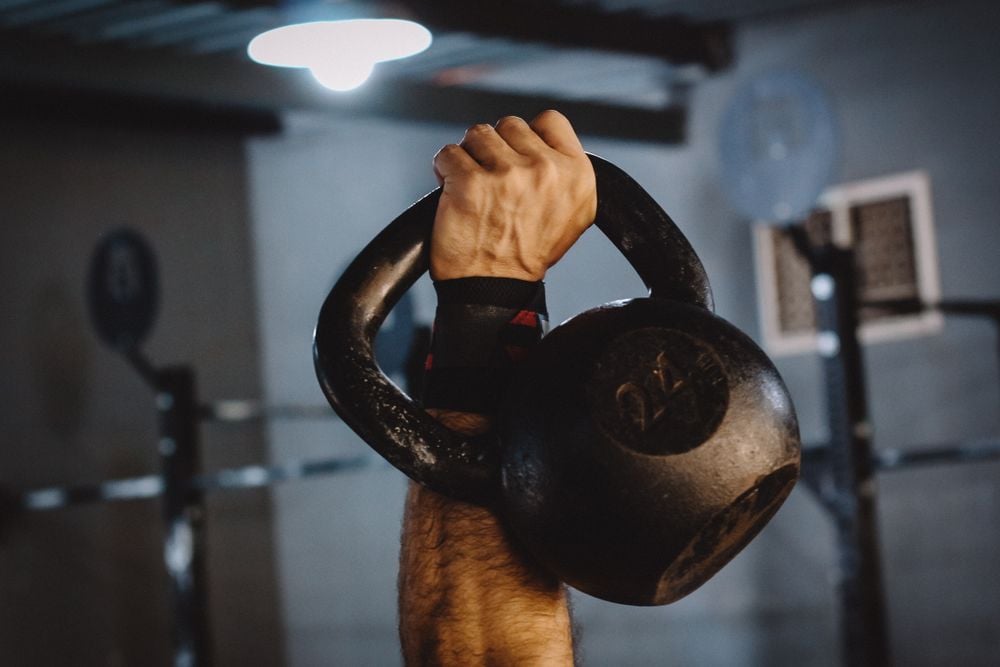
His version fits under a desk. Roth described keeping a kettlebell there and swinging it for one minute every hour.
One minute. No gym bag.
The catch is that the swing is a skill. Rush it, and you can hurt your back, which defeats the purpose. So below is the swing itself, then five short moves that build up to it and turn it into a routine you can keep.
One thing first: this is one doctor’s personal routine. Hackensack’s own article advises checking with your physician before beginning any new exercise program, and that matters most if your back already hurts.
You’ll also like:
- Beat the Chair: 8 Simple Exercises for People Who Sit All Day
- 7 Simple Core Strength Exercises That Protect Your Back and Improve Balance After 40
- This No-Equipment, Low-Impact Workout Helps Ease Back Pain in Just 5 Moves
1. The One-Minute Kettlebell Swing
This is the main event.
Why the swing
Think about how you spend a workday. Hips bent, shoulders rolled toward the screen. The muscles along the back of your body are barely engaged at all.
Hackensack’s article says too much sitting can leave the glutes weak and the muscles at the front of the hip tight. Roth says that this imbalance can put too much stress on your back. His fix is a small kettlebell, which he says can give you time-efficient back and hamstring strengthening, plus a stretch for the hip flexors.
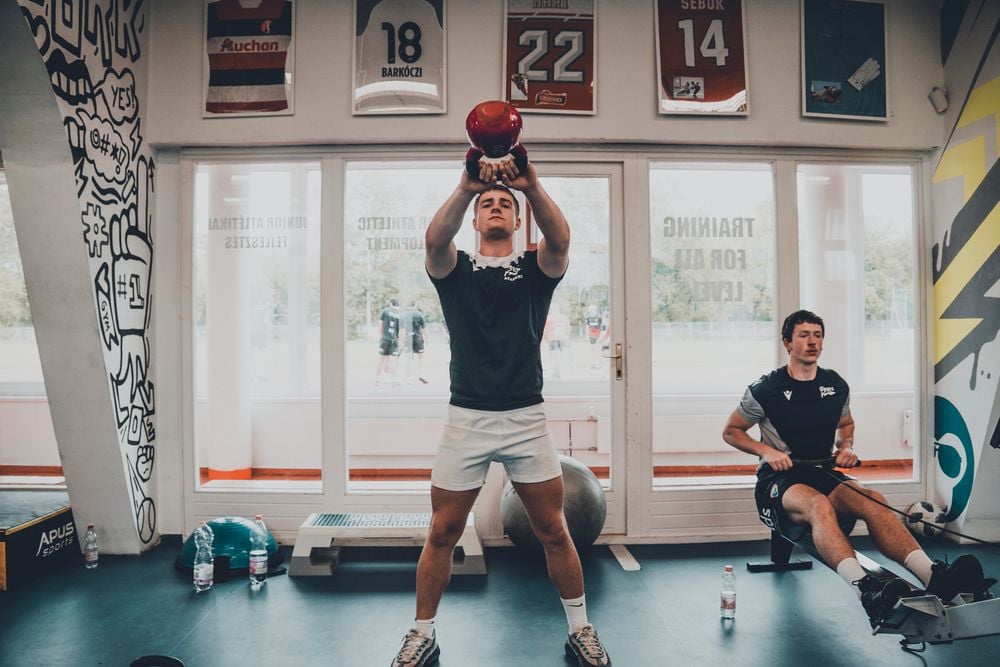
He isn’t the only one who rates the move.
Harvard Health notes that kettlebell swings target the buttocks, hips, backs of the thighs, and lower back. They can also help your posture, since your back and core are engaged during the movement.
There’s a simpler way to see it. Taylor Beebe, a certified personal trainer in California, describes the top of the swing as a standing plank: shoulders, hips, knees, and ankles stacked in one long line. Your chair puts you in the opposite shape all day.
How to do it
- Set the kettlebell on the floor a little in front of you. Stand with your feet about shoulder-width apart.
- Push your hips back, bend your knees slightly, and grab the handle with both hands. Tilt the bell toward you.
- Hike it back between your legs, like snapping a football.
- Drive your hips forward and stand up tall. Let the bell float up to somewhere between chest and eye level. Your arms guide it. Your hips power it.
- As it falls, hinge at the hips again and let it swing back between your legs. Immediately go straight into the next rep.
Beebe suggests syncing your breath: inhale as the bell travels back, exhale as your feet push into the floor.
The most common mistake? Squatting the bell up. Nadia Havens, a strength and conditioning specialist at Harvard-affiliated Massachusetts General Hospital, says many people squat to help propel the weight. The upward swing should come from thrusting the hips forward instead, which works the glutes and thighs more.
How much, and how heavy
Start smaller than a minute.
Beebe suggests that beginners do five to 10 reps at a time as a “movement snack,” then build from there. Harvard’s guidance is similar: up to 10 swings, rest, and repeat up to two more times. Once that feels steady, work toward Roth’s full minute.
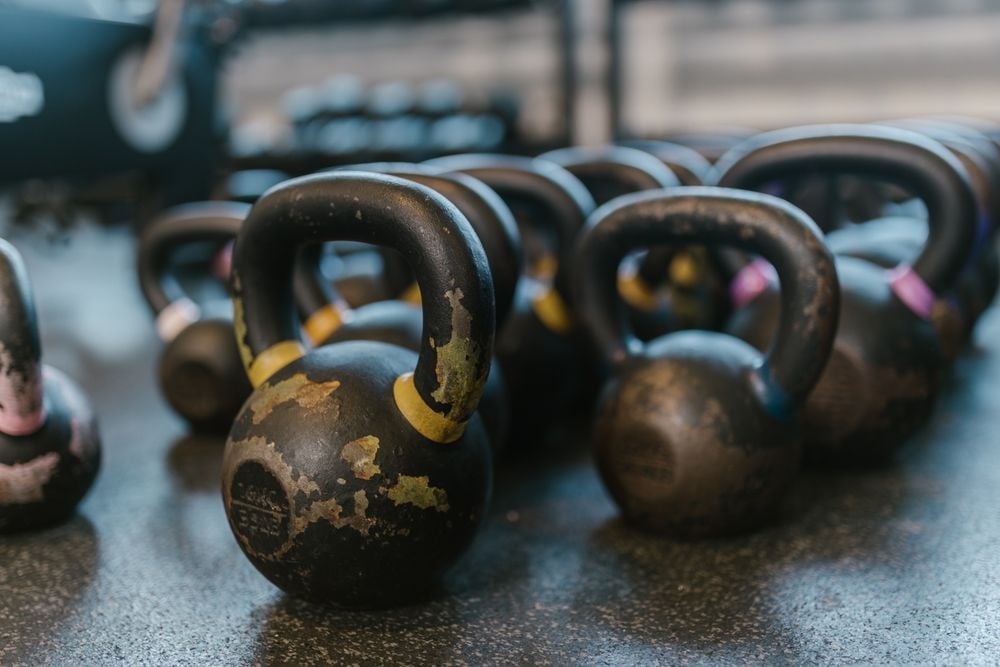
For weight, Roth suggests starting with a low weight that’s comfortable, around 10 pounds for women and 20 pounds for men. Harvard suggests a moderately challenging weight that lets you do five to 10 good repetitions, and Havens adds that if you aren’t fatigued by the end, it’s too light. Use Roth’s lighter starting point while you learn the movement. Form first, then load.
Before you start
Roth is clear on one point. If your back is already injured or in spasm, give it time to heal before you try this exercise. Starting too soon, he warns, can cause more pain and more injury.
Harvard Health adds that it may be a good idea to check with your doctor first, especially if you have osteoporosis or problems with balance.
If you’re pregnant, talk to your doctor or midwife before you try swings. The same applies if you have a diagnosed back condition.
Havens also recommends having a trainer show you how to do a proper swing before trying it on your own.
And look around first. Clear space in front of you and behind you, nothing within reach of the bell, and a solid floor underfoot. Your monitor will thank you.
2. The Broomstick Hinge
Every rep of kettlebell swings is a hip hinge: hips back, spine long, then hips forward. Learn that pattern without a weight, and the swing gets easier to pick up.

All you need is a broom.
- Hold the broomstick vertically along your back. Place one hand behind your neck, the other at the small of your back.
- Line it up so it touches three points: the back of your head, your upper back, and your tailbone.
- Soften your knees. Push your hips back and let your chest tip forward, keeping all three points on the stick.
- Stop when you feel a stretch in the backs of your thighs. Drive your hips forward to stand.
If your head comes off the stick, you’re dropping your chin. If your tailbone comes off, your back is rounding.
Ten slow reps. That’s it. You can do this beside your desk in under a minute.
3. The Kettlebell Deadlift
Beebe calls the deadlift one of the two foundation moves of the kettlebell swing. It’s the same hinge, done slowly, with the bell kept close to your legs.
- Stand with the kettlebell on the floor between your feet.
- Hinge at your hips, keeping your back flat, and grip the handle with both hands.
- Brace your midsection. Drive your hips forward and stand tall, squeezing your glutes at the top.
- Reverse the movement, sending your hips back until the bell touches the floor.
No momentum. No rush.
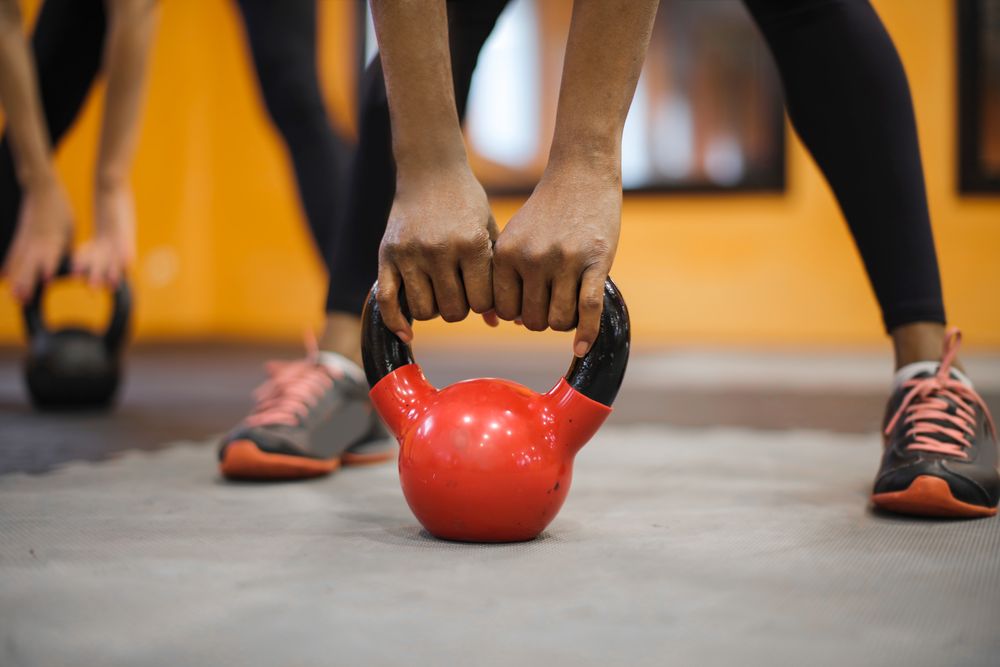
Once this feels solid, Fit&Well’s kettlebell Romanian deadlift is a useful next step. You lower the bell only until you feel a stretch in your hamstrings, then stand. The routine’s designer, certified trainer Maxwell Thompson, advises newer trainees to use lighter loads and focus on form before adding weight.
4. The Plank
Here’s the other foundation.
The plank teaches you to hold your trunk still while the rest of your body works. That’s exactly what the top of every swing asks for. Remember Beebe’s standing plank? This is the same position, lying down.
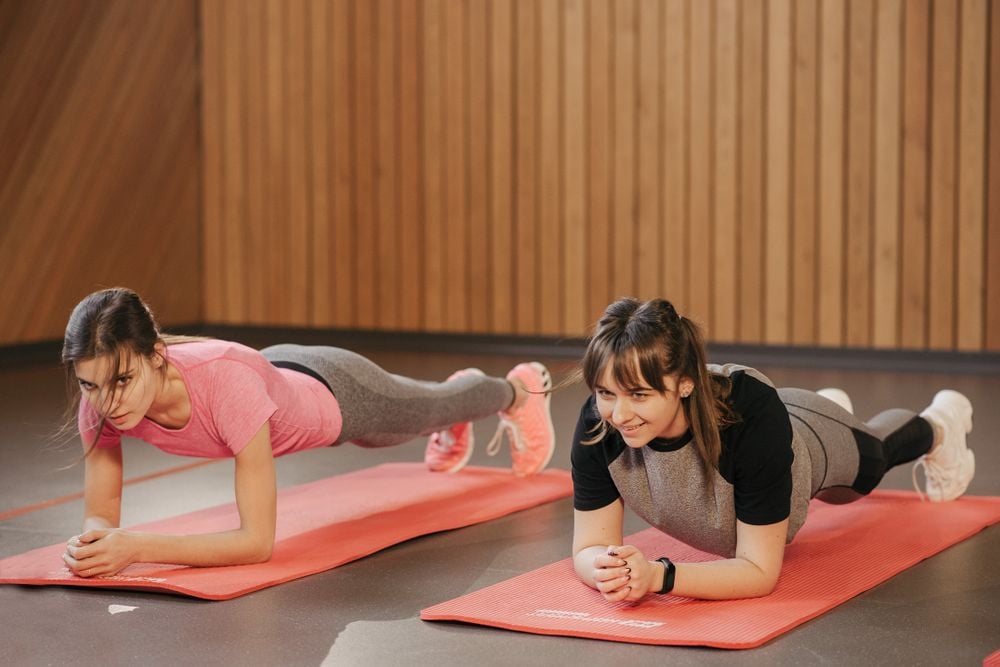
- Prop yourself up on your forearms, elbows directly under your shoulders.
- Lift your hips so your body makes a straight line from your shoulders to your feet.
- Squeeze your glutes and brace your midsection so your hips don’t sag or rise.
- Keep your neck neutral and breathe steadily.
Start with short holds you can do with proper form. Too hard? Put your forearms on a sturdy chair without wheels, or another stable surface that won’t slide, to raise your upper body.
A good plank feels boring. That’s the goal.
5. The Half-Kneeling Kettlebell Press
Kettlebell swings train the back of your body. This move adds two things a desk day doesn’t give you: arms overhead, and a stretch across the front of your hip.
- Kneel on your right knee with your left foot flat in front of you. Put a folded towel under your knee.
- Hold a light kettlebell in your right hand at shoulder height, elbow tucked in.
- Squeeze your right glute. You should feel a gentle stretch across the front of your right hip.
- Press the bell overhead without leaning back. Keep your ribs down.
- Lower it to your shoulder with control.
Do a few reps, then switch sides.
Keep the bell lighter than your swing weight. If pressing overhead pinches or hurts your shoulder, stop and have it checked before you try this move again.
6. Your Hourly Plan
A routine needs a trigger. Roth’s was the clock.
Set a quiet hourly reminder on your phone or calendar, and give each one a job:
- First week: use the hourly breaks for the broomstick hinge, deadlifts, and a short plank. No swings yet.
- Once the hinge feels natural: swap in a set of five to 10 kettlebell swings, Beebe’s “movement snack”. Then sit back down.
- When those sets feel smooth: stretch them toward Roth’s one-minute block, resting whenever your form starts to slip.
- Once or twice a day: add a couple of half-kneeling presses per side.
Miss an hour? Fine. Take the next one.

Keep the bell within reach and have a plan for when the reminder goes off. A kettlebell in the closet doesn’t do much for anyone.
Final Thoughts
Sitting is often unavoidable, but you can interrupt it. Roth’s approach turns a short break into one minute of real work for the back of your body, the side of your body that your chair ignores. The broomstick hinge, deadlift, and plank give you the movement and the bracing that kettlebell swings depend on. The press adds a stretch across the front of your hip and gets your arms overhead.
Start lighter and slower than you think you need to. Learn the hinge before you add weight, keep your sets short, and stop if anything hurts. If you already have back pain, an injury, or a condition like osteoporosis, talk to your doctor or a physical therapist before you start, and ask a trainer to check your swing. Then put the bell under your desk where you’ll see it the next hour.