5 Yoga Poses to Calm Your Nervous System and Reduce Daily Stress
 4
Mins Read
4
Mins Read
Modern life keeps our nervous system busy from the moment we wake up. Emails, deadlines, family responsibilities, and endless notifications can leave the brain in a constant state of alert. When stress becomes your default setting, it can be harder to relax, sleep well, and recharge, especially as you get older. Taking a few minutes each day to slow down via Yoga can make a real difference in how your mind and body feel.
An overstimulated nervous system can contribute to muscle tension, racing thoughts, restless sleep, and ongoing fatigue. Yoga is one of the simplest ways to encourage both your body and mind to relax. It doesn’t require expensive equipment or complicated routines. All you really need is a yoga mat, a quiet space, and a few minutes of consistent practice.
1. Child’s Pose
It’s no surprise that one of the most calming yoga poses is called Child’s Pose. After all, it leaves you feeling grounded and refreshed. Despite being incredibly simple, it gently stretches your back, hips, and shoulders while encouraging your body to slow down. It’s an excellent pose to begin or end your practice because it helps ease you into a calmer state of mind.
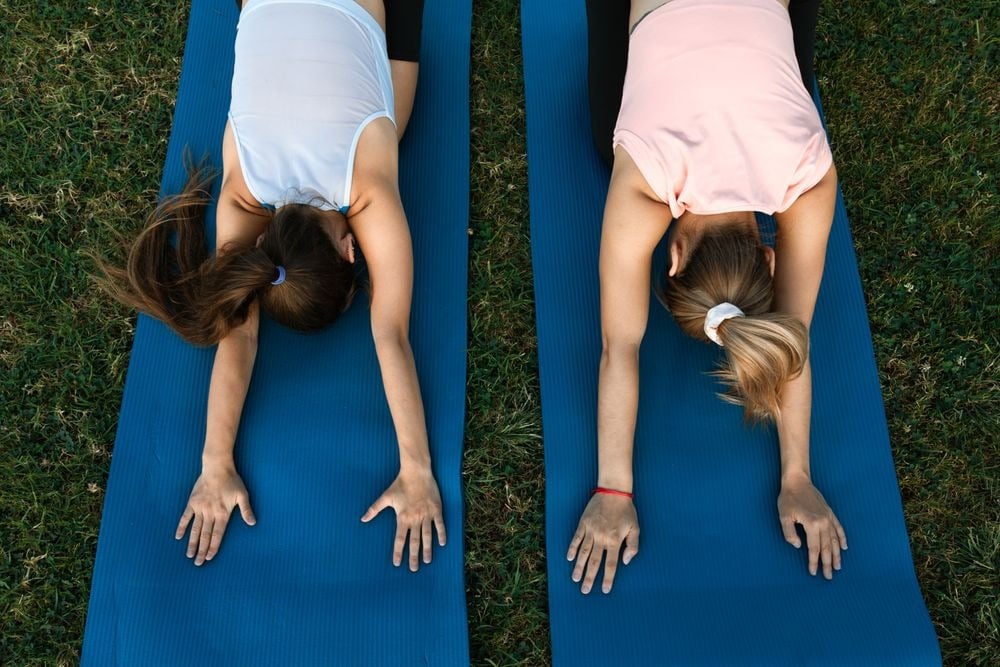
Child’s Pose is a folded position that naturally encourages slow, deep breathing. Deep breathing may help reduce your body’s fight-or-flight response, allowing you to feel calmer and less overwhelmed. As you settle into the pose, focus on making each exhale slightly longer than your inhale. This simple breathing pattern can help signal to your nervous system that it’s safe to relax.
2. Viparita Karani (Legs-Up-the-Wall Pose)
Viparita Karani, more commonly known as Legs-Up-the-Wall, is one of the easiest yoga poses to practice because it requires almost no effort. Simply lie on your back with your legs resting against a wall at about a 90-degree angle. It’s a beginner-friendly pose that can feel especially soothing after spending hours standing or sitting.
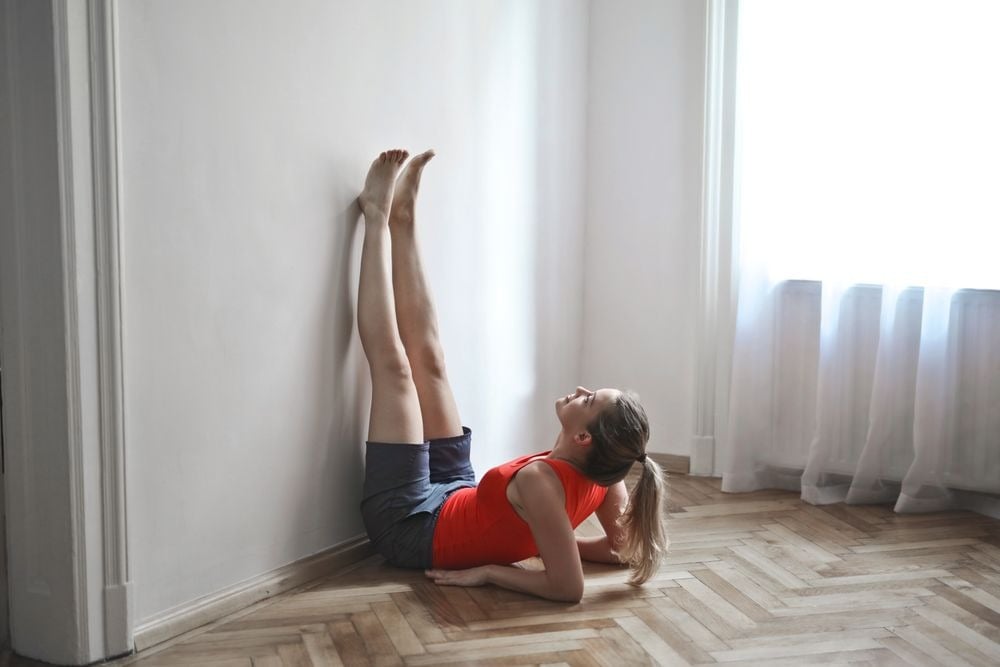
This gentle inversion encourages blood to return from your legs, which may help relieve feelings of heaviness and tiredness. Combined with slow, steady breathing, it can also promote relaxation and may help lower your heart rate. Anytime you feel overwhelmed or notice your heart racing after a stressful day, spending five to ten minutes in this position may help you feel calmer.
3. Reclining Bound Angle Pose
This gentle pose allows your body to settle into a state of deep relaxation. Begin by lying on your back, bringing the soles of your feet together while allowing your knees to fall outward. If the stretch feels uncomfortable, place pillows or folded blankets underneath your knees for extra support.
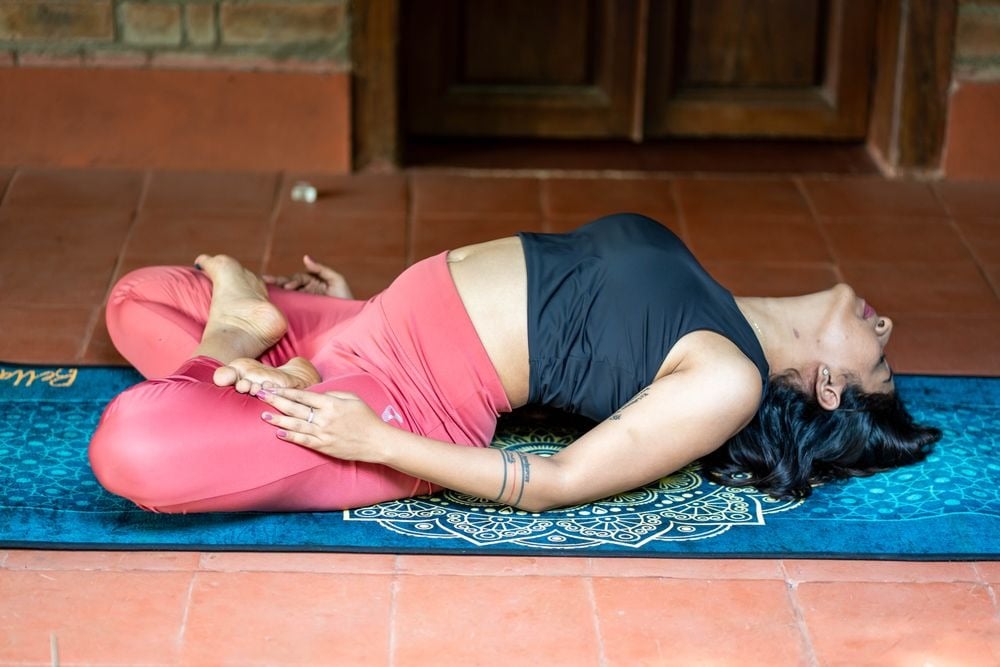
The Reclining Bound Angle Pose encourages your muscles to soften and release tension that may have built up throughout the day. It gently opens the hips without placing unnecessary strain on the joints. Since stress often shows up as physical tightness, relaxing this area can leave you feeling more comfortable and at ease. One of the best things about this pose is that you can even practice it in bed, making it an accessible option for adults of nearly any age or fitness level.
4. Cat-Cow Stretch
The Cat-Cow Stretch is named after the two positions you move between in a slow, flowing sequence. This gentle movement helps improve spinal mobility while encouraging relaxation, making it a great addition to a short daily yoga routine.
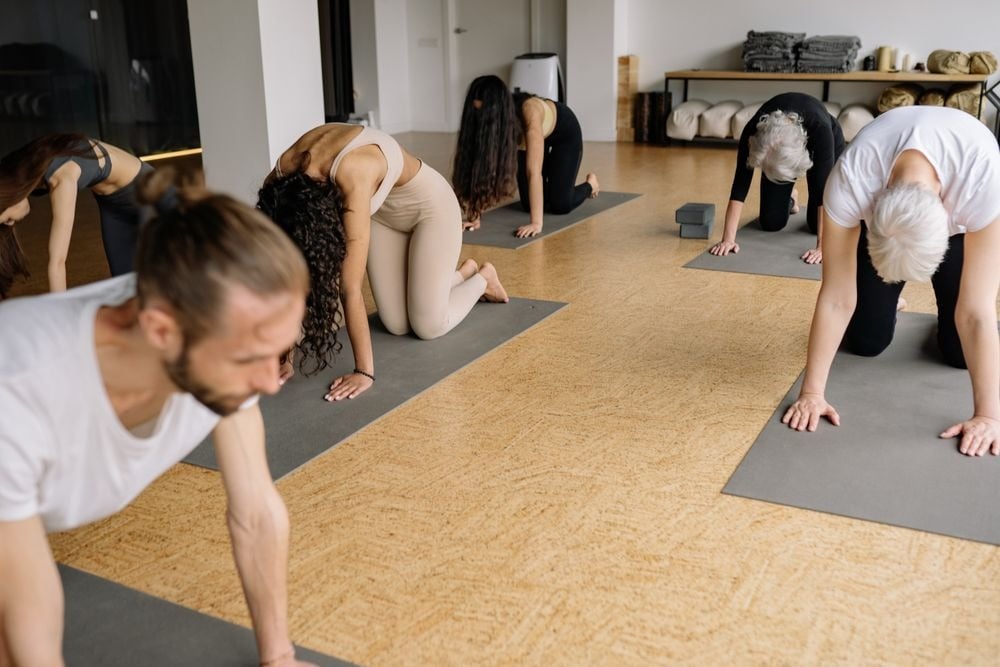
To begin, come onto your hands and knees. Inhale as you lift your chest and tailbone, allowing your back to gently arch. Then exhale as you round your spine, tucking your chin toward your chest. Matching each movement to your breathing is just as important as the movement itself. This rhythm helps quiet racing thoughts while releasing tension in the neck, shoulders, and back, where many people carry stress. Even a minute or two of slow, mindful repetitions can leave you feeling looser and more relaxed.
5. Standing Forward Fold
The Standing Forward Fold, also known as Uttanasana, stretches the entire back of your body, including your hamstrings, calves, and spine. Because your head rests below your heart, many people find this position especially calming. Just be sure not to lock your knees while holding the pose.
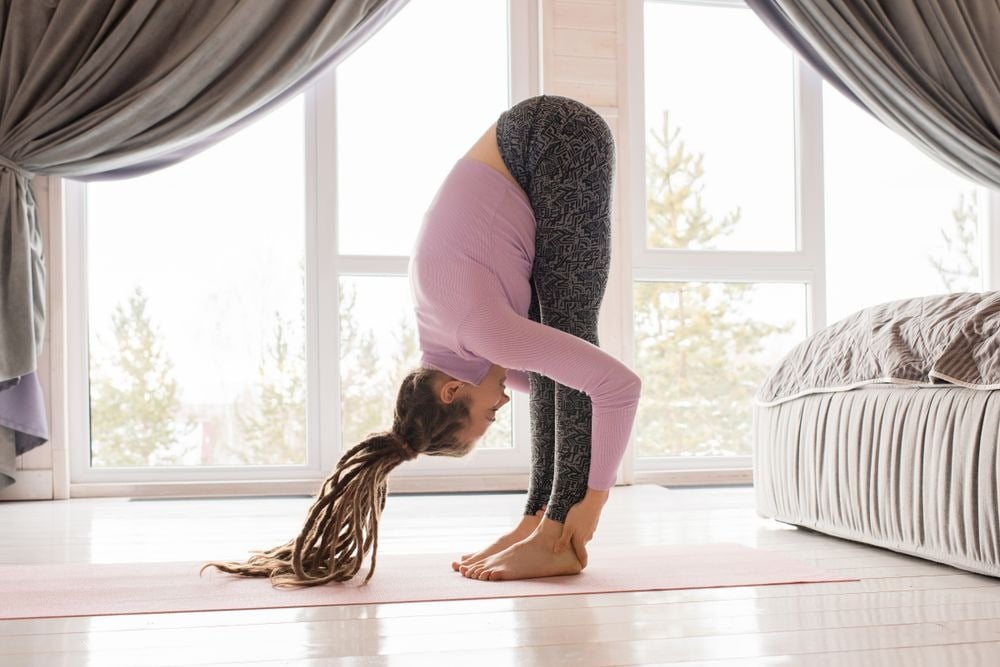
Allow your arms to hang naturally and relax your neck. Focus on slow, steady breathing, letting each exhale release a little more physical tension. If your hamstrings feel tight, keep a slight bend in your knees instead of forcing the stretch. Gently engage your core as you fold your torso over your legs, and remain in the position for 30 to 60 seconds. When you’re ready to come out of the pose, rise slowly to reduce the chance of feeling lightheaded or dizzy.
Final Thoughts
An overstimulated nervous system shouldn’t be ignored. Ongoing stress can gradually affect your mood, sleep, concentration, energy levels, and overall well-being. While yoga isn’t a substitute for medical care, regular practice may help reduce stress and encourage relaxation as part of a healthy lifestyle.
The good news is that you don’t need long workouts or complicated routines to experience the benefits. Setting aside just 15 minutes a day for gentle movement and mindful breathing can help your body shift into a more relaxed state. These five poses are simple enough for most beginners yet effective enough to become part of a daily routine that supports both physical comfort and mental well-being.
If you have an injury, chronic pain, balance concerns, or another medical condition, check with your healthcare provider before starting a new exercise routine. Practicing at your own pace and listening to your body will help you get the most from each session.