5 Simple Bodyweight Exercises to Stay Strong After 50
 4
Mins Read
4
Mins Read
Not everyone can afford to go to the gym every day, and most gym memberships can feel expensive, especially when you’re just starting. Plus, heading to the gym after spending the entire day at work and getting home at 7 p.m. doesn’t always sound appealing. This is where bodyweight exercises come into play.
But here’s something many people still haven’t realized: you don’t need heavy weights or complicated machines for an effective workout. In fact, you don’t need any equipment at all. The secret to building muscle and full-body strength is mastering basic bodyweight exercises. You can do them at home whenever you find the time, making it much easier to stay consistent.
1. The Bear Crawl
The bear crawl may look ridiculous, but it can get surprisingly challenging, surprisingly fast. It might look funny seeing someone do it, but the second you try it, you’ll understand why. It’s so effective that it’s even used in military training programs and athletic sessions. The bear crawl uses a cross-body pattern to develop coordination and full-body control in ways that many conventional exercises cannot.
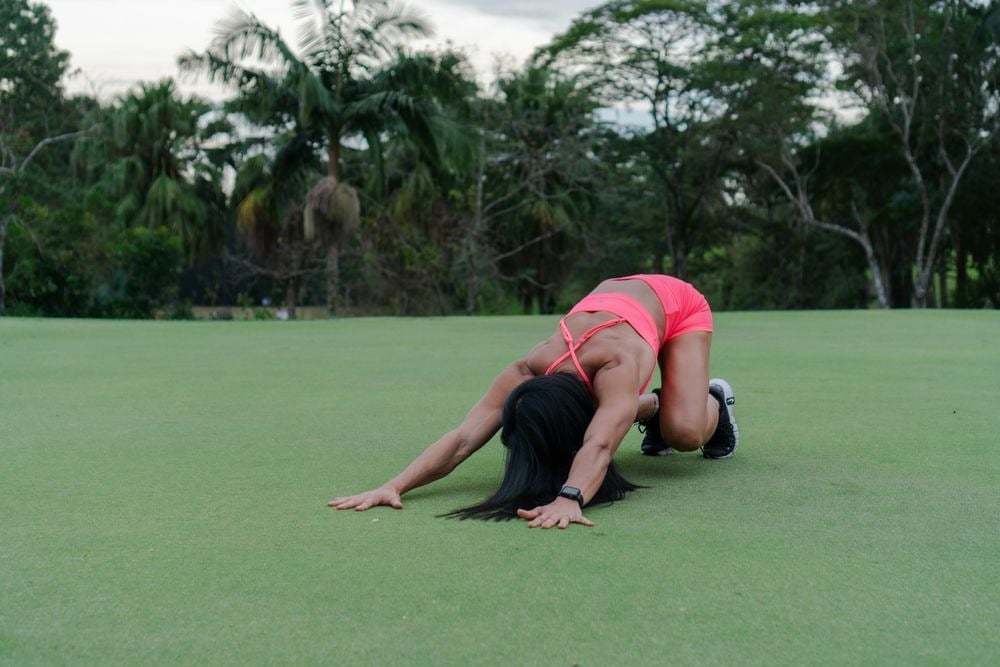
The bear crawl isn’t really a beginner warm-up exercise. It’s a demanding full-body movement that trains strength, coordination, and core stability all at once. You can work on all of these without a single piece of equipment.
Start slowly and focus on maintaining good form rather than trying to cover a lot of distance. As you become more comfortable, you can gradually increase the distance or number of repetitions.
2. The Triceps Dip
Most people assume that doing enough push-ups will also work their triceps. While they are partially right, push-ups don’t directly target your triceps the way this exercise does. The triceps dip targets your triceps, lower chest, and anterior deltoids more directly than a push-up.
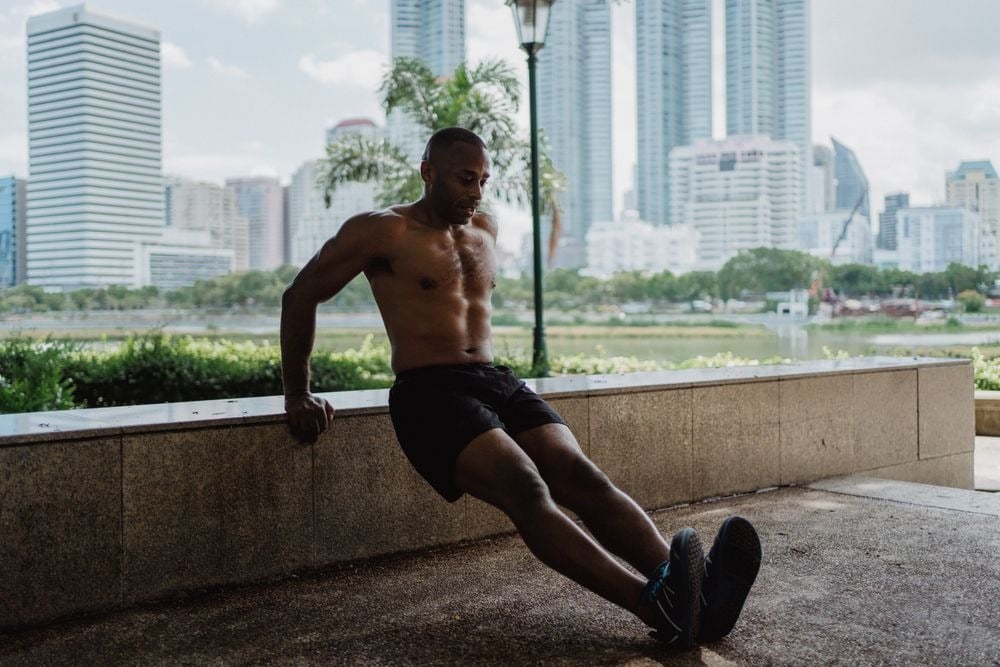
This exercise might look simple and manageable at first, but after the first few reps, it can completely humble you. That’s also why it deserves a place in a bodyweight routine. Dips can challenge your triceps through a large range of motion while also working your upper body.
You can perform them using a sturdy chair or bench at home. Keep your torso relatively upright and your elbows close to your body as you lower yourself. If you’re new to dips, start with a smaller range of motion and gradually work your way up.
3. Bodyweight Squat
The squat is one of the most important lower-body movements you can train. Your ability to squat comfortably matters well beyond the gym because you use a similar movement pattern when sitting down, standing up, climbing stairs, and moving through everyday life.
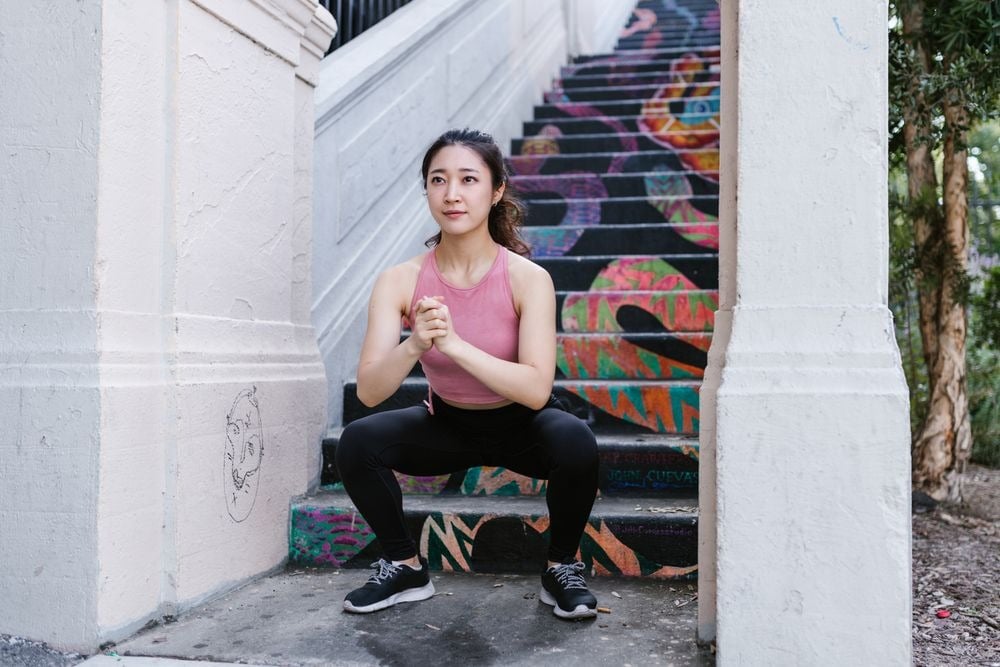
Doing regular squats can help you live longer and remain more independent as you age. Maintaining lower-body strength becomes particularly useful as you get older, when balance, mobility, and the ability to perform everyday movements can have a major impact on independence.
Squats primarily target your glutes, quads, and hamstrings. To perform one, stand with your feet around shoulder-width apart and lower your hips while keeping your chest lifted. Keep your knees tracking in line with your feet rather than allowing them to collapse inward.
If a regular squat feels difficult, you can squat to a sturdy chair for support until your strength and confidence improve.
4. The Pike Push-Up
Many bodyweight exercises are great for the chest and back but often neglect the shoulders. There are relatively few shoulder exercises you can perform at home without weights, and the pike push-up is one of the best options.
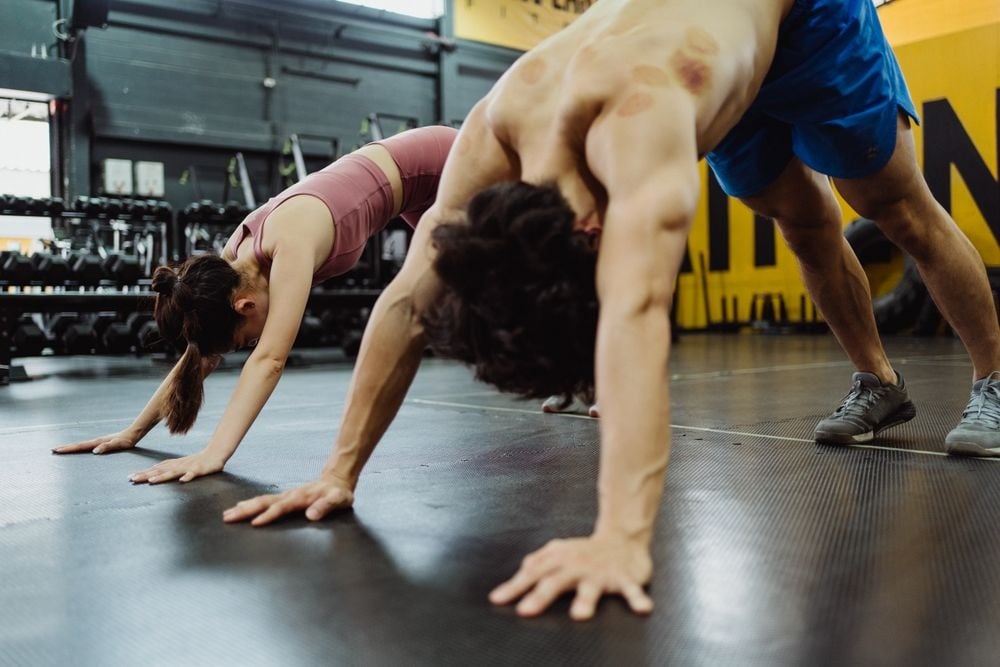
To do a pike push-up successfully, start in a downward dog position with your hips raised high so your body forms an inverted V shape. Walk your feet slightly closer to your hands so that your torso is as vertical as possible. With control, bend your elbows and lower the top of your head toward the floor, then push back up to the starting position.
The more upright you make your torso, the more challenging the movement can become for your shoulders. If the exercise feels too difficult, you can reduce the range of motion or work on holding the starting position first.
5. The Lunge
When done correctly, the lunge can be one of the most useful lower-body and balance exercises you can do without equipment. There are many times during the day when you perform a single-leg movement without even realizing it, including something as simple as walking or climbing stairs. The lunge helps train this movement pattern while challenging each leg individually.
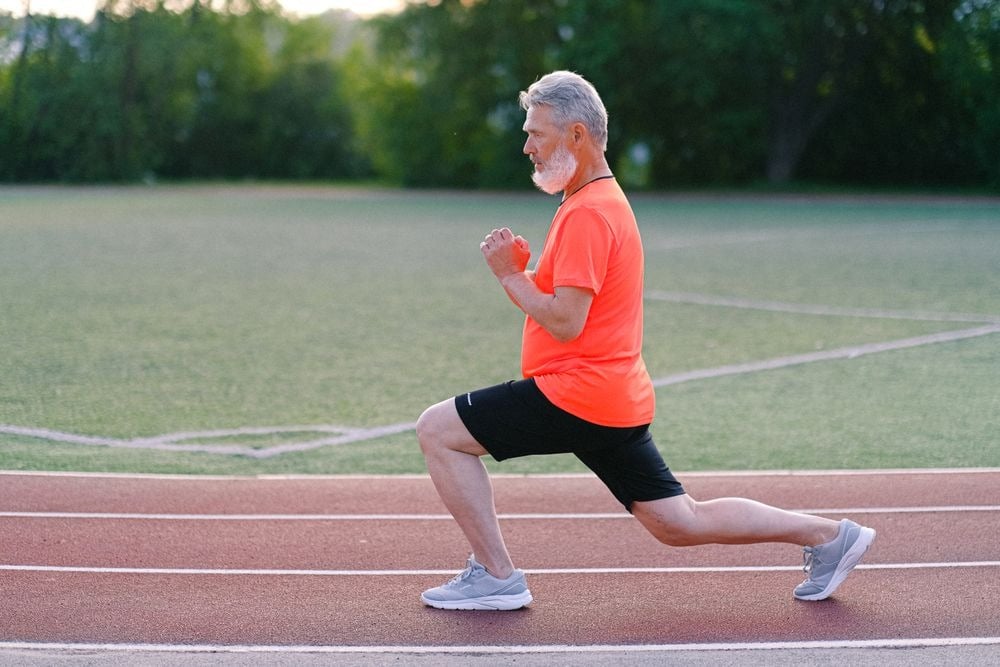
The lunge trains your quads, hamstrings, glutes, and hip flexors simultaneously. At the same time, it challenges your balance and coordination, which can help support mobility and control.
It also strengthens the muscles around major joints such as your knees, hips, and ankles. Another useful benefit is that lunges can make it easier to notice strength differences between your left and right legs.
If regular forward lunges feel unstable, hold onto a sturdy surface for support or try a split squat first. Focus on controlled movement rather than trying to go as low as possible.
Final Thoughts
Building muscle and full-body strength isn’t about having fancy equipment or spending endless hours at the gym. It comes down to consistency and choosing movements that challenge your muscles in useful ways. These exercises can be adjusted to suit different fitness levels and ages, making them a practical option for working out at home.
Not everyone can make it to the gym every day, but that doesn’t mean you have to ignore your body. Bodyweight exercises can help you build strength, improve balance, and make everyday movements easier, all from the comfort of your home.
Start with a few repetitions of each exercise and focus on learning proper form. As the movements become easier, gradually increase your repetitions or sets. The goal isn’t to do everything perfectly from day one. It’s to build a routine you can actually stick with.