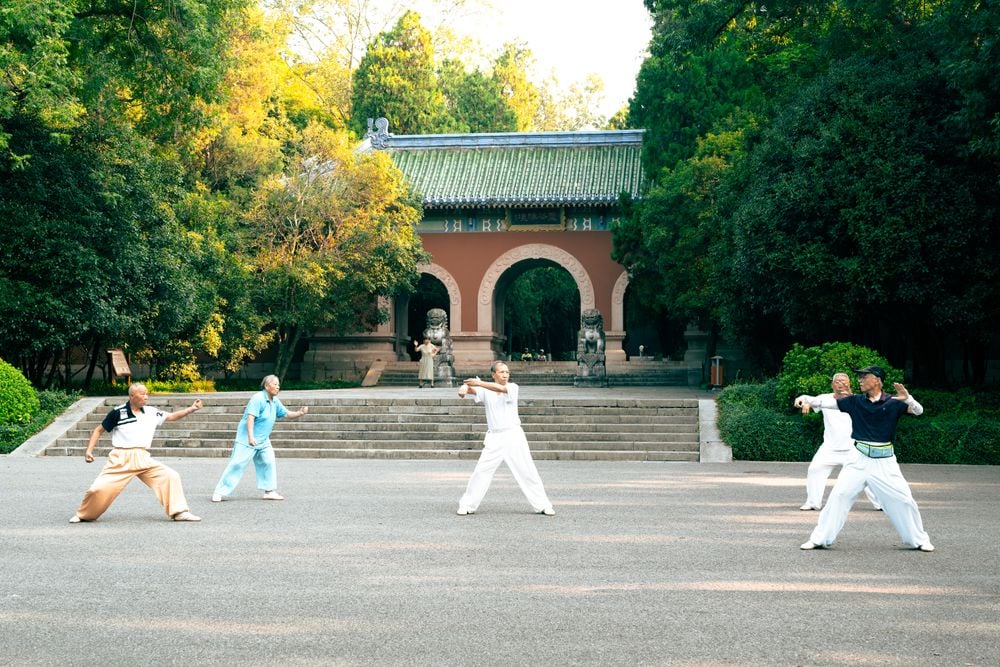
Wake Up Stiff? 5 Gentle Tai Chi Moves to Start Your Morning
 7
Mins Read
Have you ever swung your legs out of bed and felt like the rest of your body needed a few extra minutes to catch up? Maybe your hips won’t open, your lower back feels set in place, or your ankles creak for the first few steps. A tai chi morning routine can give your body a chance to loosen up before the day starts pulling at you.
Tai chi is slow by design. Every movement is unhurried and controlled, and your breathing moves in time with your movement. You don’t need a mat or much floor space. Pajamas are fine.
The research is promising, with caveats worth knowing up front. Much of what the NIH’s complementary health center summarizes involved people with a specific condition practicing for weeks or months. A review of nine osteoarthritis studies concluded that tai chi improved pain and stiffness, and 2019 guidelines from the American College of Rheumatology and the Arthritis Foundation strongly recommend it for knee and hip osteoarthritis. A newer 2021 review of knee osteoarthritis studies rated the evidence low to moderate, so the picture is encouraging.
We couldn’t find a study that tests a short routine done first thing in the morning. So treat this as a habit you can build. The payoff in the research came from steady practice over time.
One more thing before you start. If your stiffness lasts a long time every morning, or comes with swelling or warmth in a joint, see a doctor rather than relying on a routine like this.
Want to get straight to it? Skip ahead to move one. Each move takes a minute or two, and this tai chi morning routine fits into about ten minutes, warm-up included.
You’ll also like:
- Why Tai Chi Walking Might Be the Best Thing You Can Do for Yourself
- 6 Easy Morning Habits That Can Change How Your Whole Day Feels
- 5 Yoga Poses to Calm Your Nervous System and Reduce Daily Stress
Before You Stand: Wake Up Your Ankles and Wrists
Start where you are, sitting on the edge of the bed with your feet flat on the floor.
Lift one foot slightly and draw slow circles with your ankle, five in each direction, then switch feet. Do the same with your wrists. Finish by rolling your shoulders back a few times.
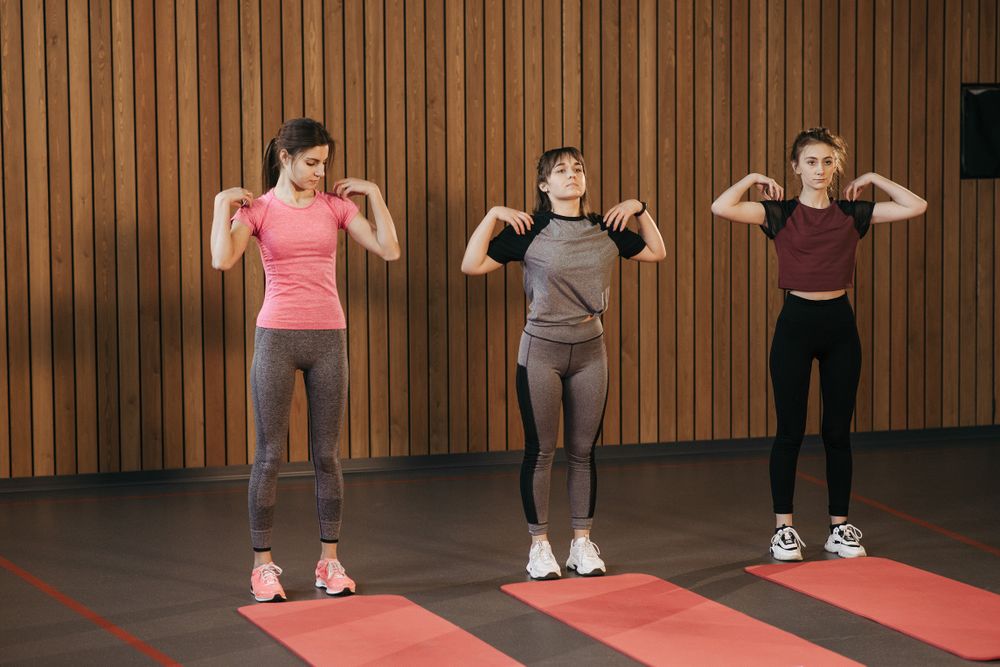
It’s a gentle way to get moving before you put weight on your feet.
Then stand up slowly. Keep a hand on the bed and pause for a breath or two. If you feel lightheaded, sit back down and wait until it passes before you try again. If it happens often, mention it to your doctor.
1. Wuji Standing With Belly Breathing
Wuji (say “woo-jee”) is a basic standing posture in tai chi. It looks like standing still. It’s a moment to notice how you’re standing before you move, and it’s the base of every move in this tai chi morning routine.
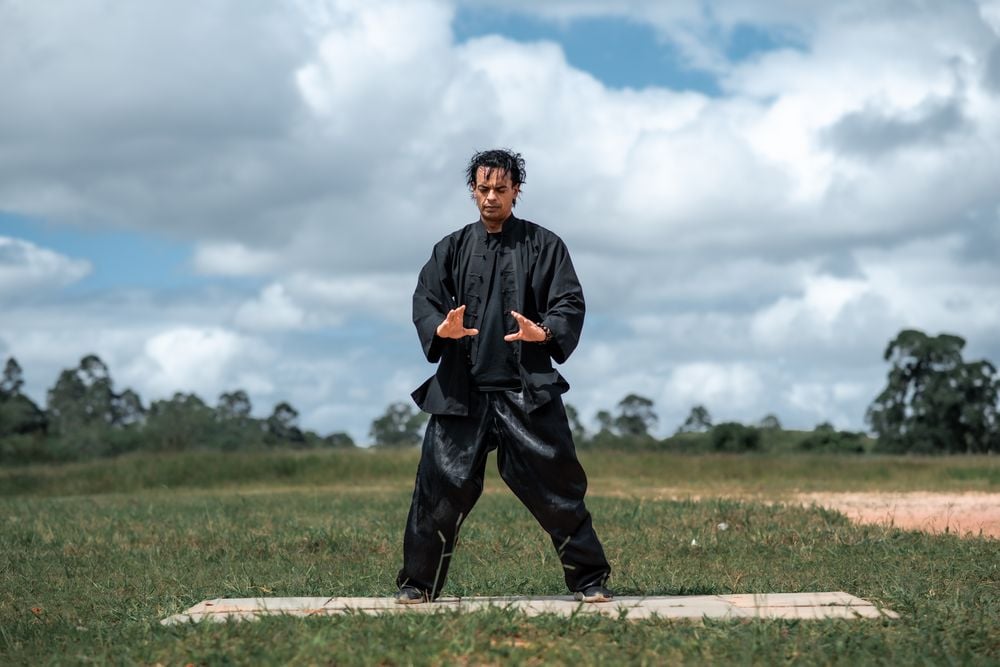
How to do it
- Stand with your feet hip-width apart, toes pointing forward.
- Unlock your knees so they’re soft. You’re not squatting, just not braced.
- Let your tailbone feel heavy, and the crown of your head float up, as if a string were lifting it.
- Let your arms hang loosely, with a little space under your armpits.
- Rest one hand on your belly. Breathe in through your nose and feel your belly press gently into your hand. Breathe out slowly and feel it soften.
Stay here for about a minute.
It looks like nothing much, but it’s the foundation of this routine. Every move that follows starts from here.
2. Waist Turning With Loose Arm Swings
This is the simplest move in the routine. Do it slowly and let it warm you up.
Waist turning lets your spine rotate gently while your arms swing loosely along for the ride.
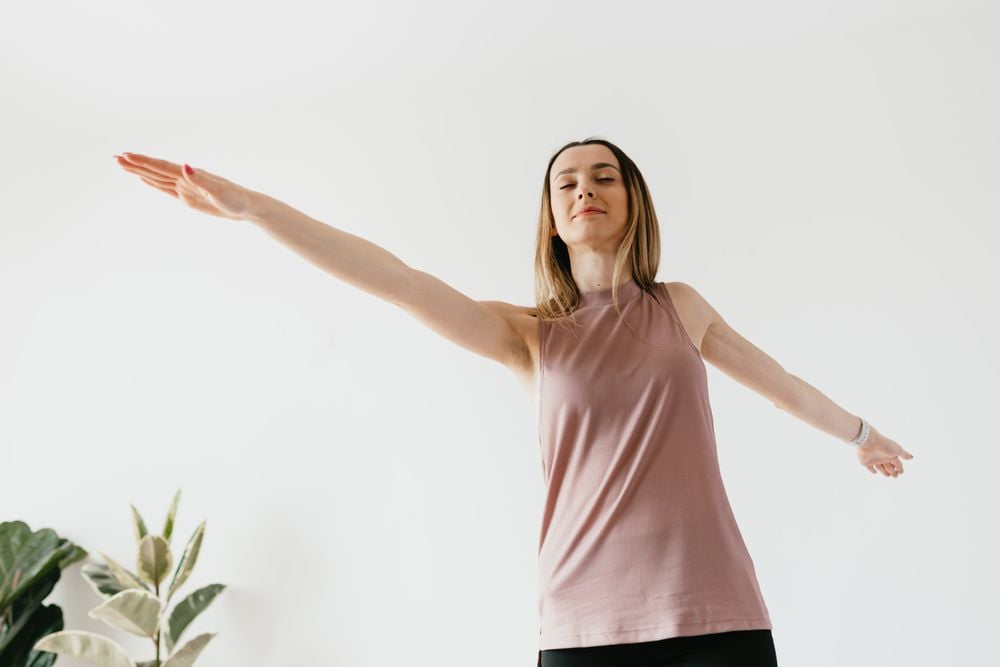
How to do it
- Stand in Wuji, with your feet a little wider than hip-width.
- Turn your waist slowly to the right and let your arms swing loosely with you. Your left hand may brush across your belly while your right hand swings behind you.
- Turn back through the center and over to the left.
- Keep your heels down and your knees soft. Your head turns with your chest and goes no further.
- Keep going for 10 to 20 easy, slow turns, keeping the swing small and relaxed.
Go easy if your back complains.
If you have osteoporosis, have had back surgery, or have a back problem that flares with twisting, keep the turn small and slow with no swing, or leave this one out. Ask your doctor or physical therapist what range is right for you.
3. Cloud Hands
If you’ve ever watched people doing tai chi in a park, you’ve probably seen cloud hands. Your hands drift past your face like passing clouds while your weight simultaneously flows from one leg to the other.
It looks easy.
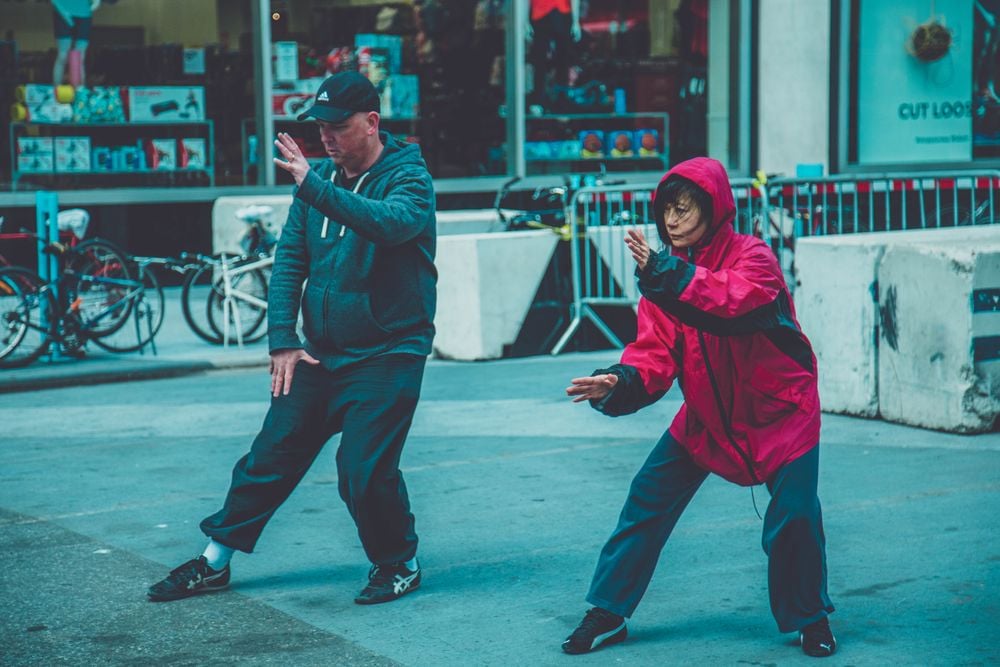
The challenge is getting your arms, waist, and legs to move together as one connected piece. This is the centerpiece of the tai chi morning routine, so give it the most time.
How to do it
- Stand with your feet about shoulder-width apart, knees soft.
- Raise your right hand to chest height, palm facing you, as if you were holding a bowl against your chest. Let your left hand rest near your belly, palm down.
- Slowly twist your waist to the right. Your upper hand travels with you, and your weight drifts into your right leg.
- At the end of the turn, swap hands. The right hand floats down toward your belly and the left hand rises to chest height.
- Turn back to the left, letting your weight settle into your left leg.
Keep the pace slow enough that you could stop at any point. Do five to eight passes each way.
A common mistake
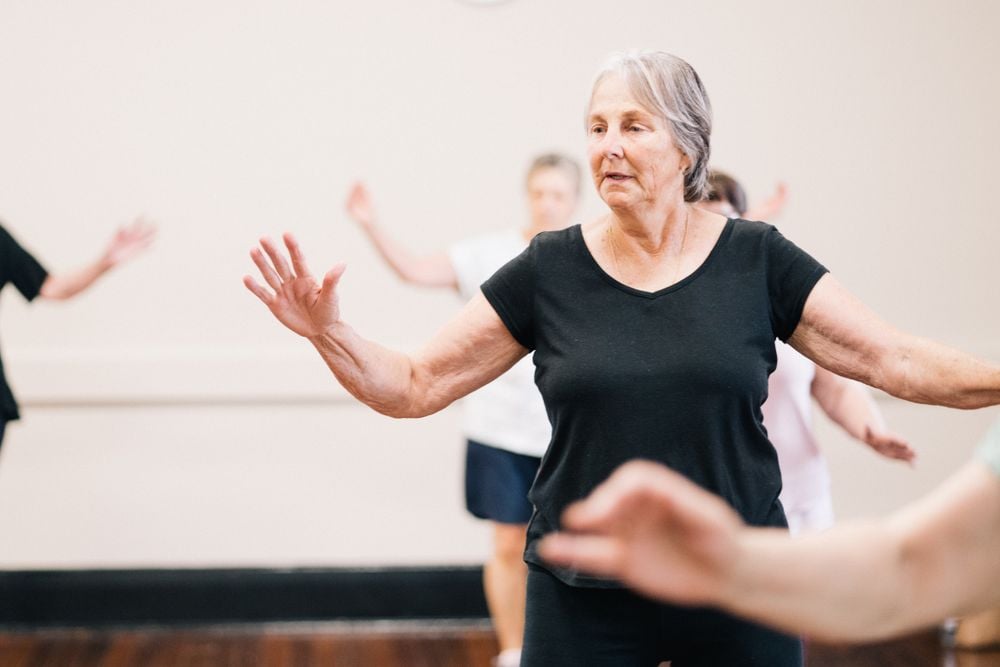
Moving your arms on their own. If your hands are sweeping side to side while your waist stays put, slow down. Your hands should only go where your waist turns them.
Make it easier
If your balance feels shaky, stand close to a kitchen counter so you can steady yourself. Or try sitting on a sturdy chair. You lose the weight shift, but you keep the arm pattern and the turn of the torso.
4. Two Hands Hold Up the Heavens
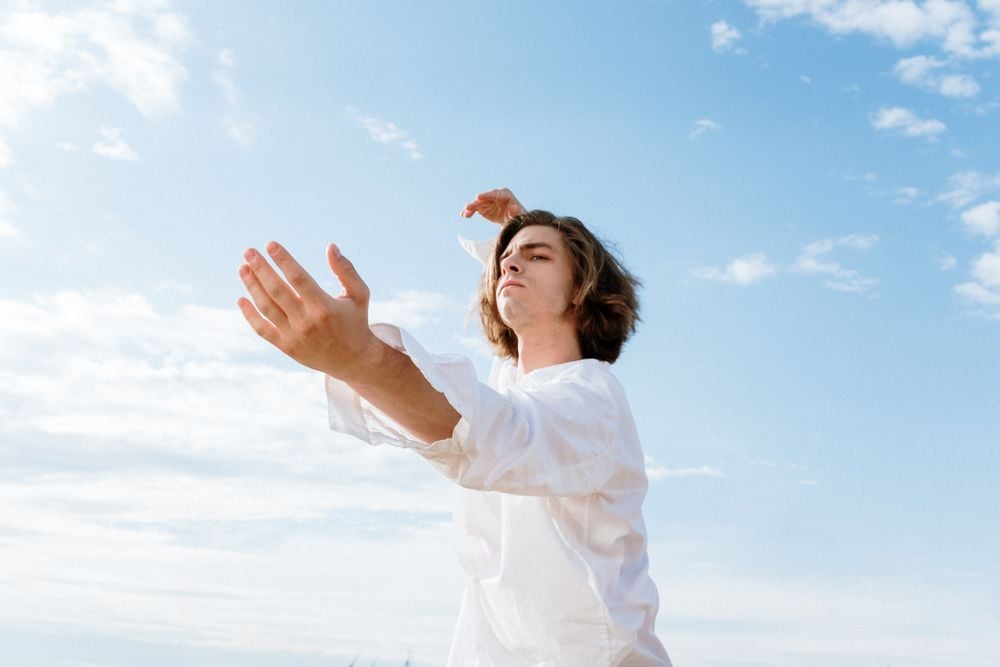
This one comes from Baduanjin, a set of eight qigong exercises also called the Eight Brocades. Qigong is tai chi’s close cousin, and this move works well as a morning stretch.
You lengthen your whole body at once, from your feet to your fingertips.

How to do it
- Stand in Wuji. Interlace your fingers in front of your lower belly, palms facing up.
- Breathe in and slowly lift your hands in front of your body.
- At chest height, turn your palms to face away from you, then press them up toward the ceiling. Straighten your arms as far as feels good.
- Let your eyes follow your hands only if your neck is comfortable looking up. Otherwise, keep your gaze forward.
- Breathe out, unlace your fingers, and float your arms down by your sides in a wide arc.
Repeat four to six times.
Make it easier
If your shoulders don’t like going overhead, stop with your hands at forehead height. You may still feel a gentle stretch along your sides.
5. Front-to-Back Weight Shifts
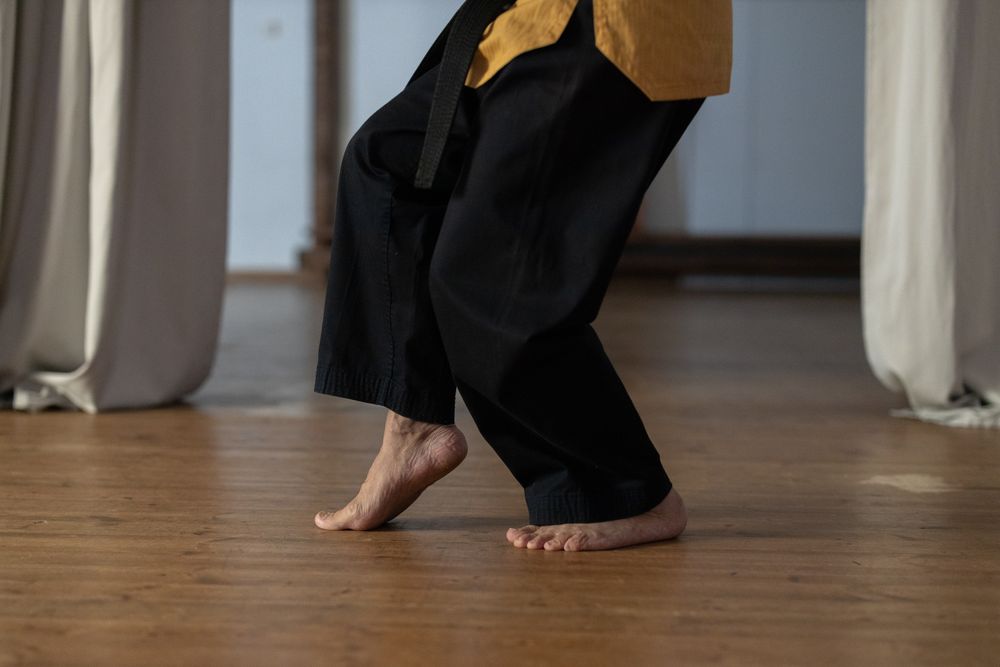
Tai chi steps rely on this skill: moving your weight smoothly from one leg to the other without lurching. So much so, it’s worth practicing on its own.
Stand beside a kitchen counter or the back of a sturdy chair, and rest one hand on it.
How to do it
- Step one foot half a step forward, keeping your feet about hip-width apart side to side.
- Bend both knees slightly.
- Slowly shift your weight forward until most of it sits over your front foot. Your back heel stays down.
- Shift your weight back into your rear leg. Your front toes can lift a little if that feels natural.
- Rock forward and back eight to ten times, then switch feet for eight to ten reps on the other side.
A common mistake
Leaning. If your head and shoulders are tipping forward and back, the movement has moved into your upper body. Keep your chest upright and let your legs carry the shift.
Ending your tai chi morning routine on balance work is deliberate. Balance is one of the better-studied areas of tai chi. A 2019 review of fall-prevention exercise in older adults living in the community, as summarized by the NIH’s complementary health center, found high-certainty evidence that tai chi may reduce the number of people who fall by 20 percent. That figure comes from full tai chi programs, not this one drill, and other balance exercises helped too.
Final Thoughts
Finish simply. Stand in Wuji, let your hands float down to your sides, and take a few slow breaths before beginning your day. Start with the moves that feel good in your body and add the rest when you feel ready. Give the habit a few weeks before you judge it.
Tai chi appears to be safe, and the side effects reported in studies were mostly minor aches and pains. If you’ve had a recent injury or surgery, have balance problems, or are pregnant, check with your doctor or physical therapist before you start. A home routine shouldn’t stand in for seeing a doctor about a new or worsening problem. Used well, it’s ten quiet minutes that will help your body catch up with you.