15-Minute Standing Barre Workout: 7 Moves to Do at Your Kitchen Counter
 7
Mins Read
Barre classes have a reputation. Mention a barre workout, and people immediately picture a mirrored studio, a polished wooden rail, and a room full of former dancers in matching leggings.
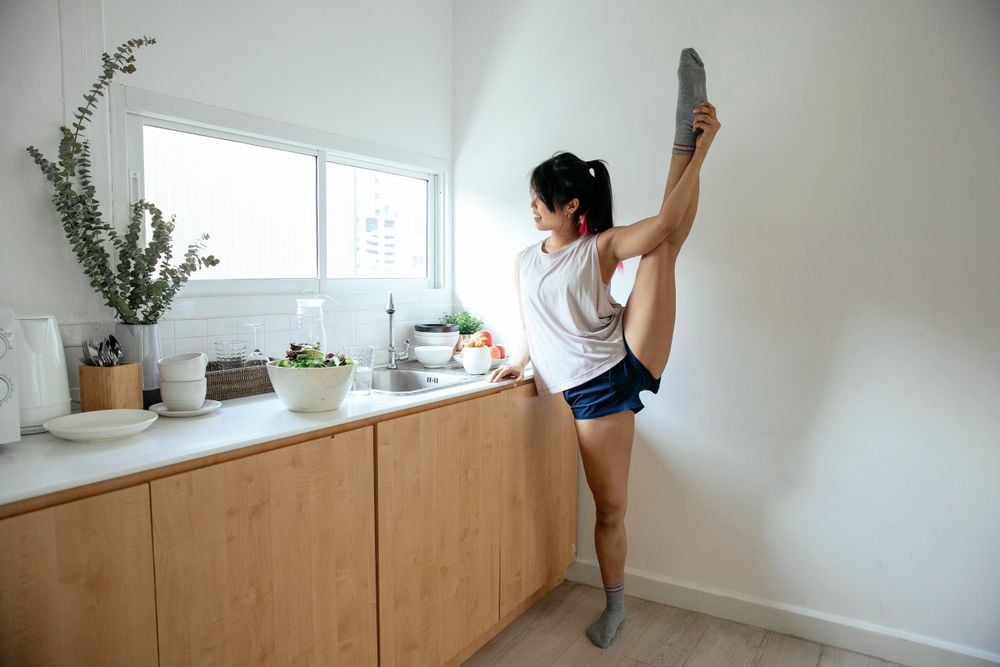
You can skip all of that. This standing barre workout uses your kitchen counter as the rail and your own bodyweight as resistance. It takes about 15 minutes, and you never get down on the floor.
Barre workout borrows positions from ballet and pairs them with slow, Pilates-style control. This workout focuses on small ranges and slow reps, with pulses at the end of a set until your muscles start to shake.
Does it build strength? The evidence is thin, but it points the right way. Research on barre’s specific benefits is still limited. One small trial comes from Chulalongkorn University in Bangkok. Researchers split 30 sedentary female office workers, aged 30 to 45, into two groups. All of them worked at the same company, and none had an existing muscle or joint condition. One group did barre training three times a week for eight weeks. The other group carried on as normal.
By the end of the trial, the researchers reported that the barre group had gained significantly more strength and endurance in their legs and core than the group that didn’t train.
Two caveats. Their sessions ran for an hour, and the study doesn’t list the moves they did. This 15-minute barre workout isn’t that study’s routine, and it won’t match an hour of training.
Treat it as a starting point. Do it two or three times a week and add a round when it gets easy.
You’ll also like:
- 5 Common Pilates Mistakes That Could Be Holding Back Your Results
- 7 Exercises Runners and Hikers Should Do to Protect Their Knees
- 5 Yoga Poses to Calm Your Nervous System and Reduce Daily Stress
Before You Start
Check the counter first. It needs to be solid and fixed in place. Anything on wheels, or anything that tips when you lean on it, is out.
Go barefoot or wear grippy socks on a floor that isn’t slick.
For the upright moves, rest your fingertips on the counter. Don’t grip it. If your knuckles are white, the counter is doing the work instead of your legs.
Two of the moves are different. In the fold-over and the counter push-up, you lean forward, and your hands take real weight. Place them flat and firm for those.
Keep breathing through every hold and every set of pulses. Don’t hold your breath.
If you’re unsteady on your feet, keep one hand on the counter for every move, including the last one.
The format: go through the seven moves below once, in order, slowly, and with short rests between each move. One round of this barre workout, with short rests, takes roughly 15 minutes. When it starts to feel easy, rest for a minute and go through it again.
The moves get harder as you go. The first three are gentle. The last one asks you to let go of the counter completely.
If you have any knee, hip, or ankle problems, a balance condition, or you’re recovering from surgery, check with your doctor or a physical therapist before you start. If you’re pregnant, ask your doctor or midwife which of these moves suit you, especially the forward-leaning fold-over and the long holds. A burning muscle is expected. Sharp pain in a joint means stop.
1. Relevé
Start small.
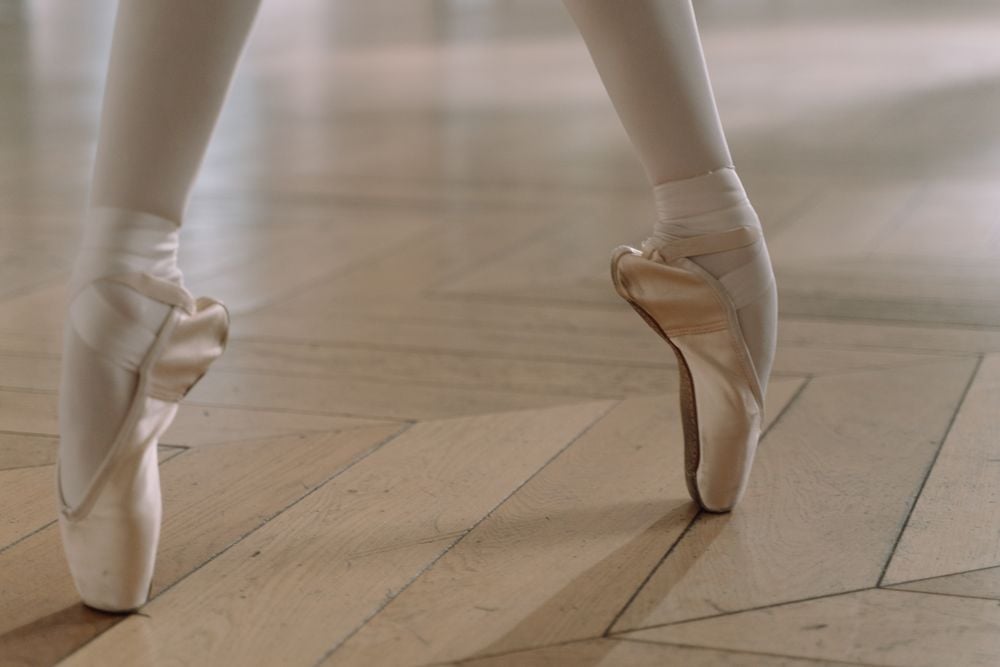
Relevé is French for “raised.” You rise onto the balls of your feet and lower down again. Simple, but it wakes up your calves and ankles and gets you standing tall before the harder work.
How to do it:
- Face the counter with your fingertips resting on the edge, feet parallel with each other and hip-width apart.
- Rise onto the balls of your feet, lifting your heels as high as you can without rolling out toward your little toes.
- Pause at the top for a second, then lower slowly, taking two counts to come down.
Reps: 15. On the last rep, hold the top position for 10 seconds.
Rise straight up, like an elevator, with your weight over your big toe and second toe.
2. First-Position Plié
Now the classic ballet move.
Plié means “bent.” In first position, your heels touch, and your toes turn out into a small V. Don’t force that V wider than it wants to go. A narrow one is plenty.
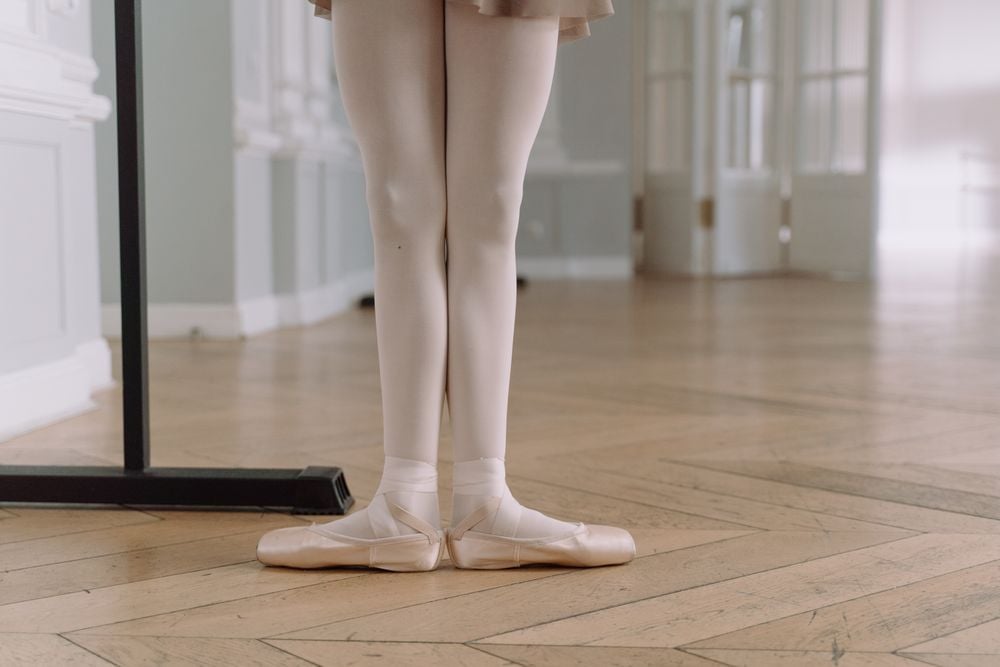
How to do it:
- Stand side-on to the counter with one hand resting on it, heels together, toes turned out.
- Bend your knees and let them travel out over your toes, keeping your heels on the floor and your spine tall.
- Go only as low as you can while your heels stay down and your knees stay in line with your toes, then press back up.
Reps: 15.
Watch your knees on every rep. If they drift inward past your big toes, narrow the V or don’t go as low.
3. Wide Second Plié With Pulses
This is where the shaking begins.
Second position is a wide stance, feet well apart, toes still turned out. It’s a classic barre move for the inner thighs, and it works your glutes and quads along the way.
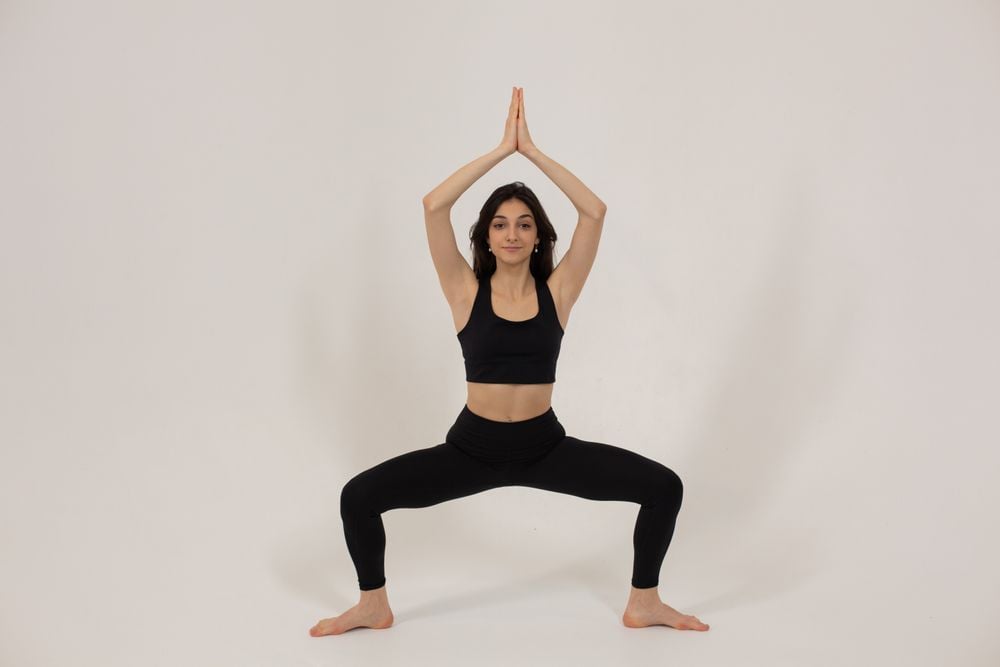
How to do it:
- Stand side-on to the counter, feet wider than your hips, toes turned out and knees pointing toward your toes.
- Lower your hips, keeping your chest lifted and your back straight, until your quads are as close to parallel with the floor as you can manage with good form. Press back up.
- After your last rep, stay low and pulse: an inch down, an inch up.
- Finish by holding the bottom position.
Reps: 12, then 10 pulses, then a 30-second hold.
Barre workout uses high repetitions and holds to fatigue your muscles, and this hold is where you’ll feel it. Stay in it as long as your knees keep tracking over your toes. When your form slips, stand up.
4. Arabesque Lift
Turn to face the counter. The next two moves work the back of your body.
An arabesque is the ballet pose with one leg extended straight behind you. Here, you lift one leg in small, controlled reps, which puts your glutes and hamstrings to work.
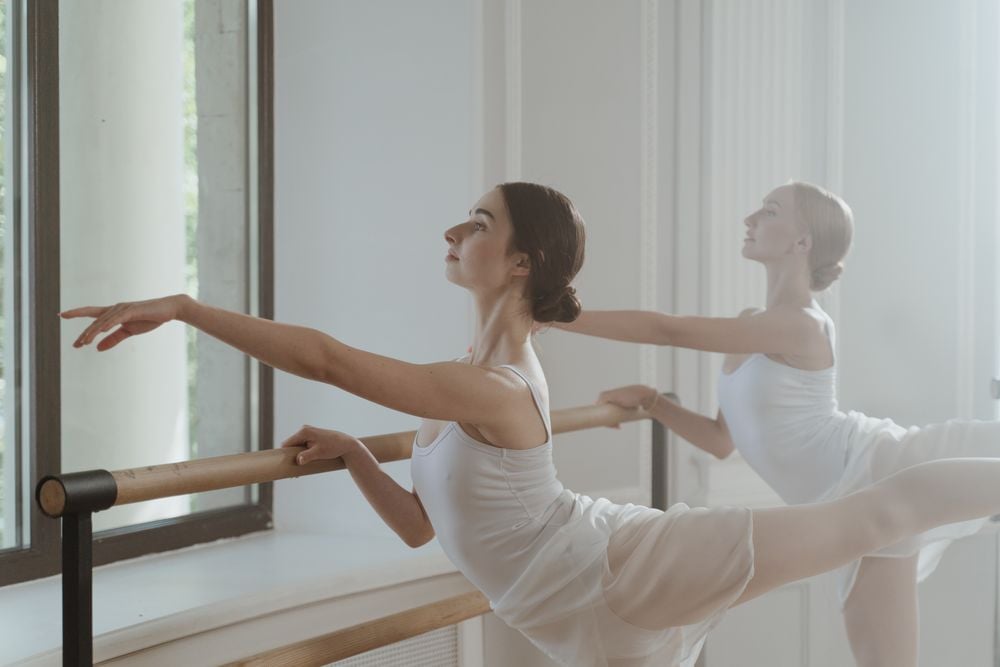
How to do it:
- Face the counter with both hands resting on it. Hinge slightly forward from your hips, keeping your spine long.
- Extend your right leg straight behind you, toes lightly touching the floor.
- Squeeze your glute and lift the leg a few inches. Lower it without letting your toes touch down, then lift again.
- Keep both hip bones pointing towards the counter the entire time.
Reps: 15 on each side, finishing with 10 small pulses at the top.
Height doesn’t matter here. If your lower back arches so your leg can go higher, bring your leg down until the arch goes away.
5. Fold-Over
Next, lean further forward.
The fold-over tips you further forward than the arabesque. With your working knee bent, your glute does most of the lifting, while your core holds your trunk steady.
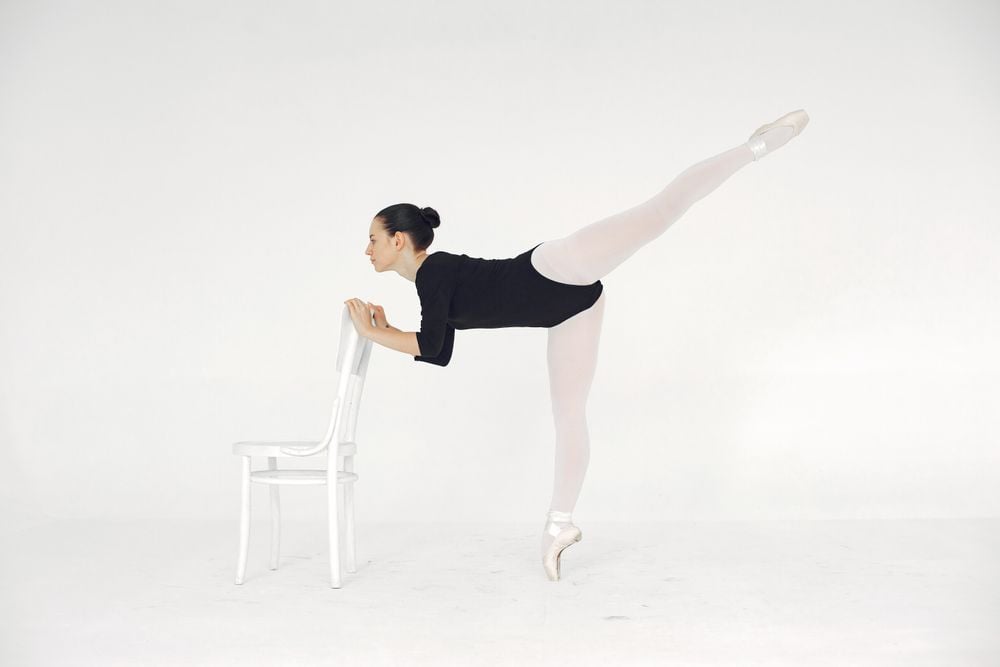
How to do it:
- Place your hands flat on the counter about shoulder-width apart. Walk your feet back and hinge forward until your back is close to flat, or as far as your hamstrings allow.
- Keep a soft bend in your standing knee.
- Bend your right knee to roughly a right angle and flex your foot so the sole faces the ceiling.
- Press your heel up a few inches, lower it slightly, and press up again. Keep your hips level.
Reps: 15 on each side.
Imagine you are stamping a footprint on the ceiling. That image keeps the work in your glute and stops your lower back from taking over.
6. Counter Push-Up
The first five moves are all legs and core. This one gives your upper body a turn.
That matters. The CDC’s guidance for adults calls for muscle-strengthening activity on two or more days a week that covers all the major muscle groups, including your chest, shoulders, and arms.
The counter makes this push-up easier to scale than one on the floor.
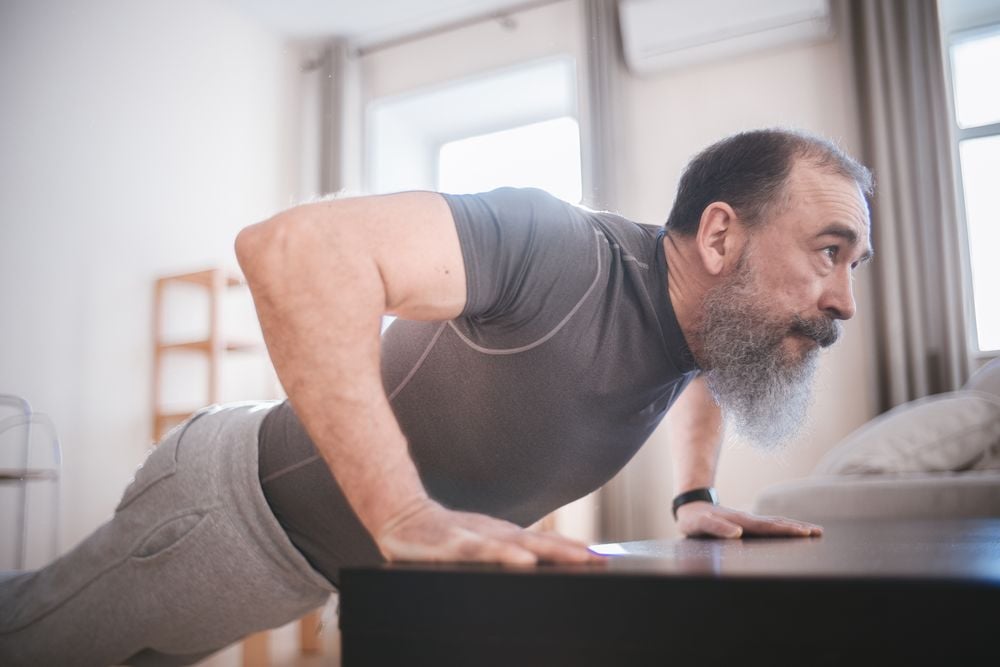
How to do it:
- Place your hands on the edge of the counter, shoulder-width apart.
- Walk your feet back until your body forms one straight line from your head to your heels.
- Bend your elbows straight back, keeping them close to your ribs, and lower your chest toward the counter.
- Press back to the start.
Reps: 12, then hold halfway down for 10 seconds.
Too easy? Walk your feet further back. Too hard? Step in closer. The angle does the scaling for you.
7. Low Retiré Balance
The final move. Time to let go.
Retiré is the ballet position where one foot is drawn up the inside of the standing leg, with the knee opening out to the side. In a ballet class, the foot travels up to the knee. Here you can keep it low. It looks calm. Holding it without support is another story.
How to do it:
- Stand side-on to the counter with one hand resting on it, and shift your weight onto your left leg.
- Slide your right foot up the inside of your left leg and rest it against your calf, well below the knee, with your right knee pointing out to the side.
- Stand tall and lift your hand so it hovers just above the counter. Hold.
- To make it more challenging, rise onto the ball of your standing foot for the last 10 seconds.
Reps: a 30-second hold on each side.
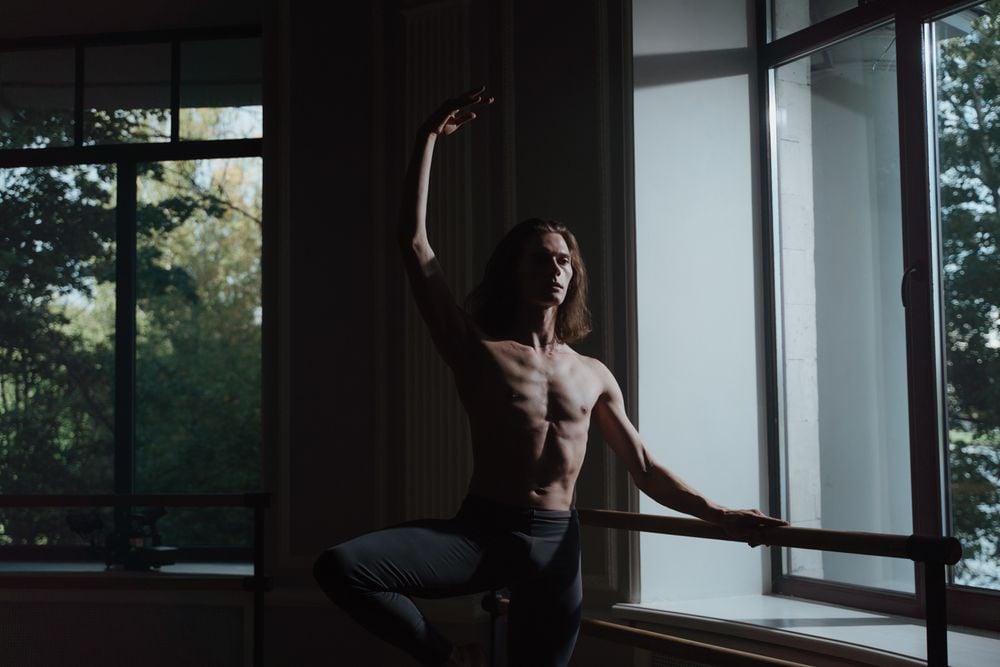
Fix your eyes on one spot in front of you. A wobble is fine. Touch the counter, reset, and let go again.
Keep the counter within reach throughout. If you have a balance condition, leave your hand on it. Skip the rise onto the ball of your foot if you’ve had a recent fall, often feel dizzy when you stand up, or have osteoporosis.
Final Thoughts
Seven moves and a kitchen counter. That’s the whole setup. Between them, the moves reach your legs, glutes, core, and upper body. One slow round of this barre workout takes about 15 minutes. You can even do it while dinner is in the oven.
Try this circuit two or three days a week and progress slowly: add a second round, slow down every rep, hold the pliés longer, or let go of the counter sooner. If a joint hurts, as opposed to a muscle burning, stop and get it checked by a doctor or physical therapist. Your counter is already there. Use it.